Introduction

Introduction to GPU programming

Overview

1. What is a GPU

2. GPU hardware

3. Programming GPUs

4. Software - hardware mapping

Part 1: What is a GPU?

What is a GPU?

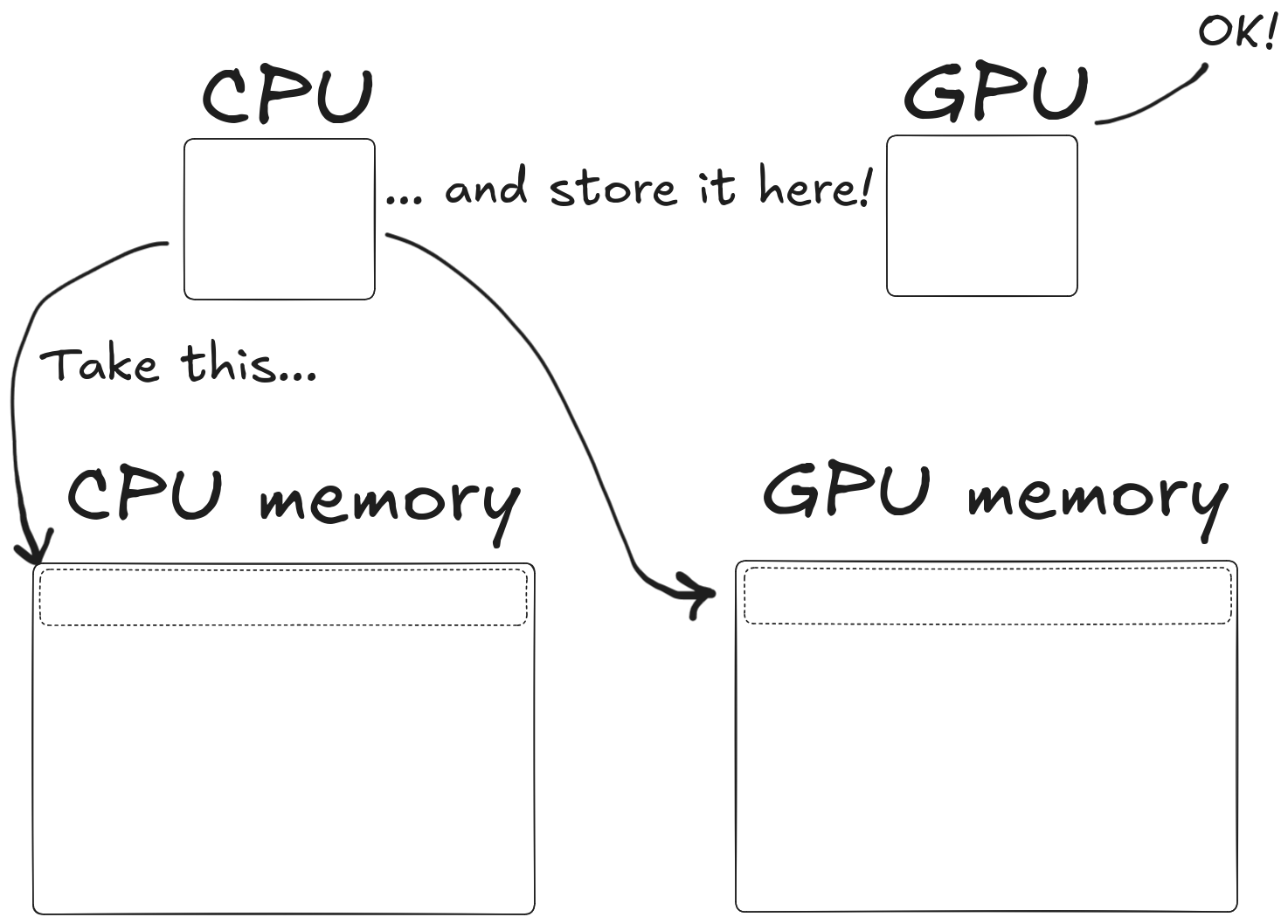
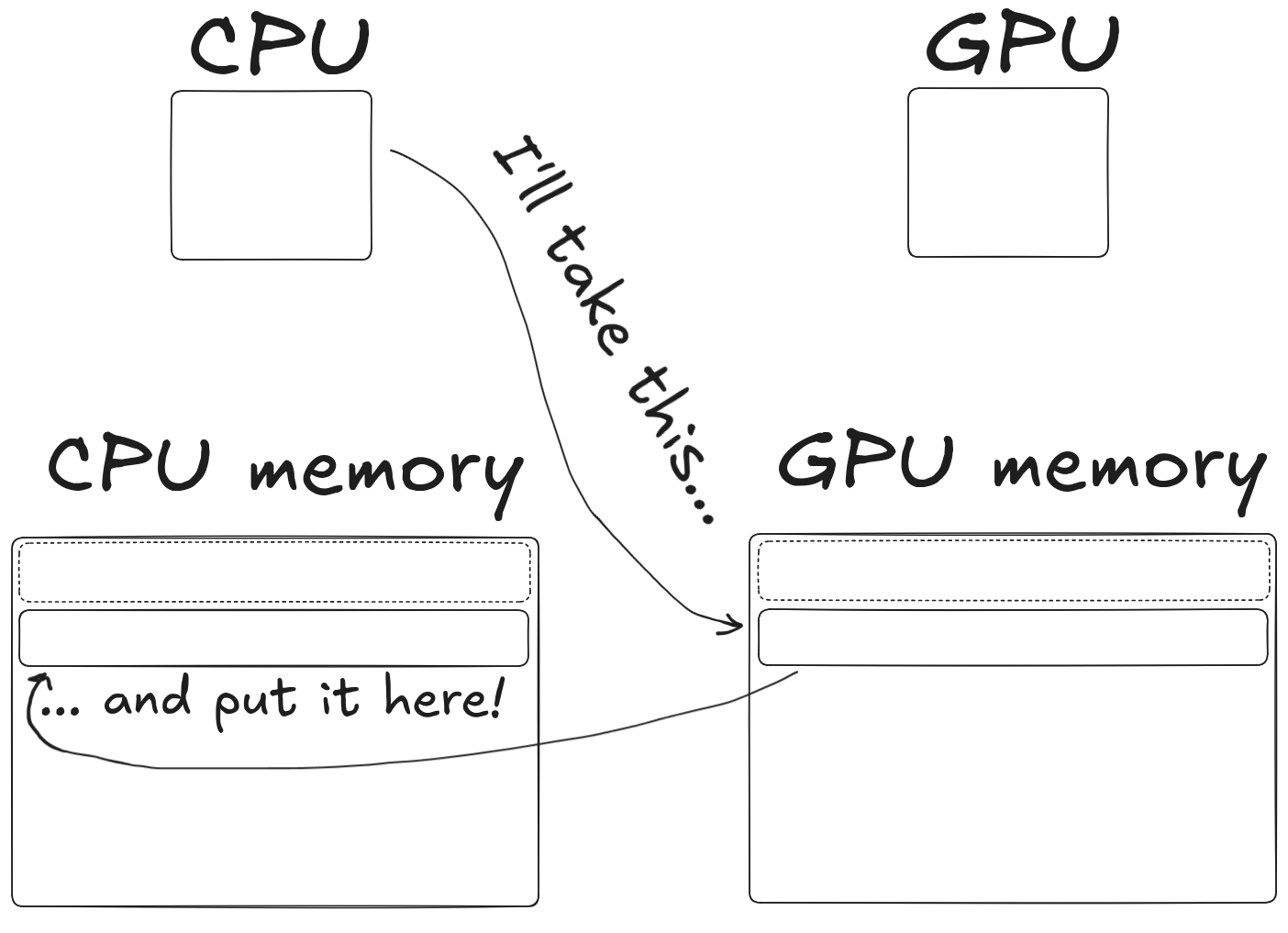
GPU is a processor with a dedicated memory area
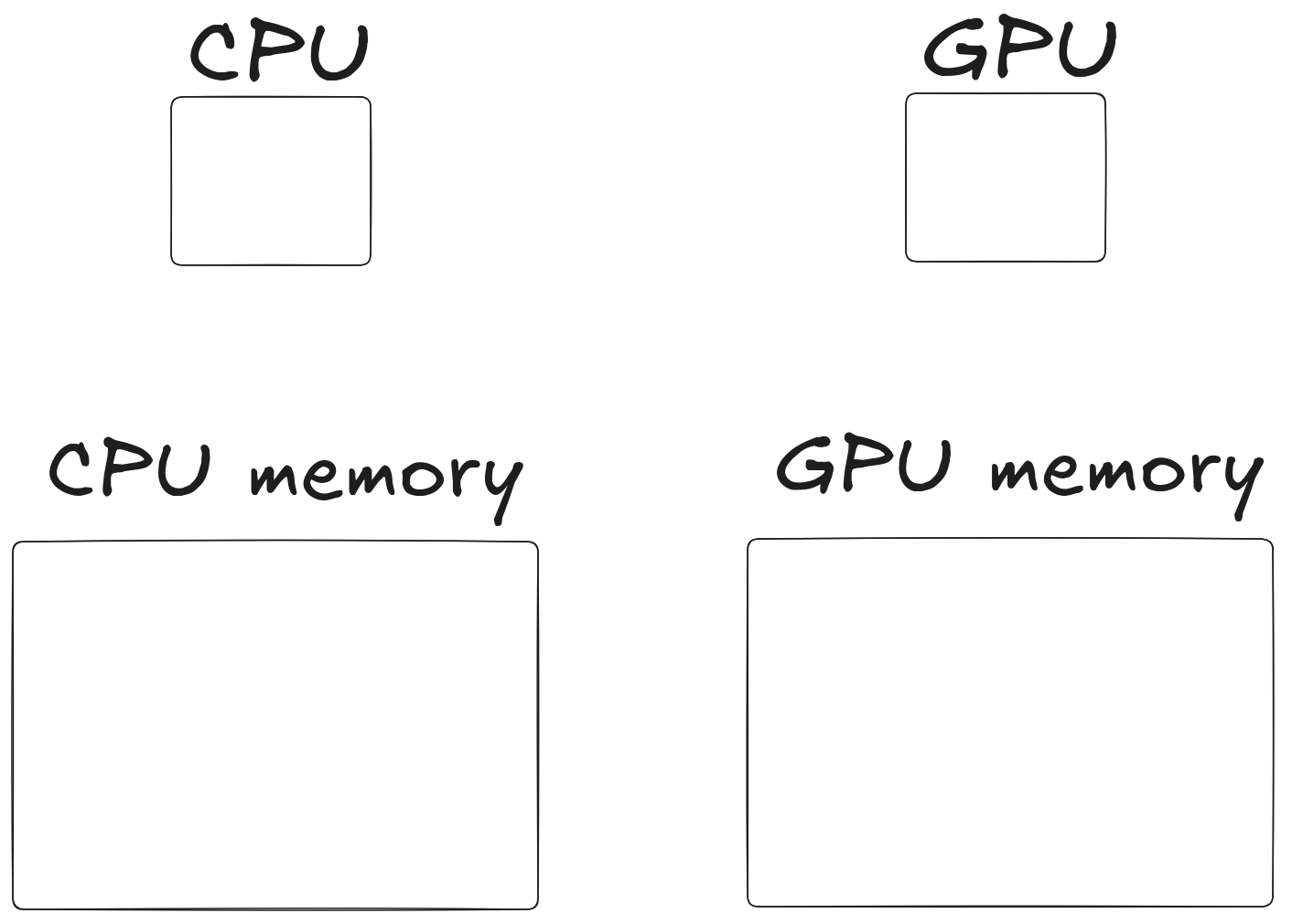
How do I use the GPU?

To use it, you have to

  1. Copy memory from CPU to GPU

How do I use the GPU?

To use it, you have to

  1. Copy memory from CPU to GPU
  2. Tell the GPU what to do with that data
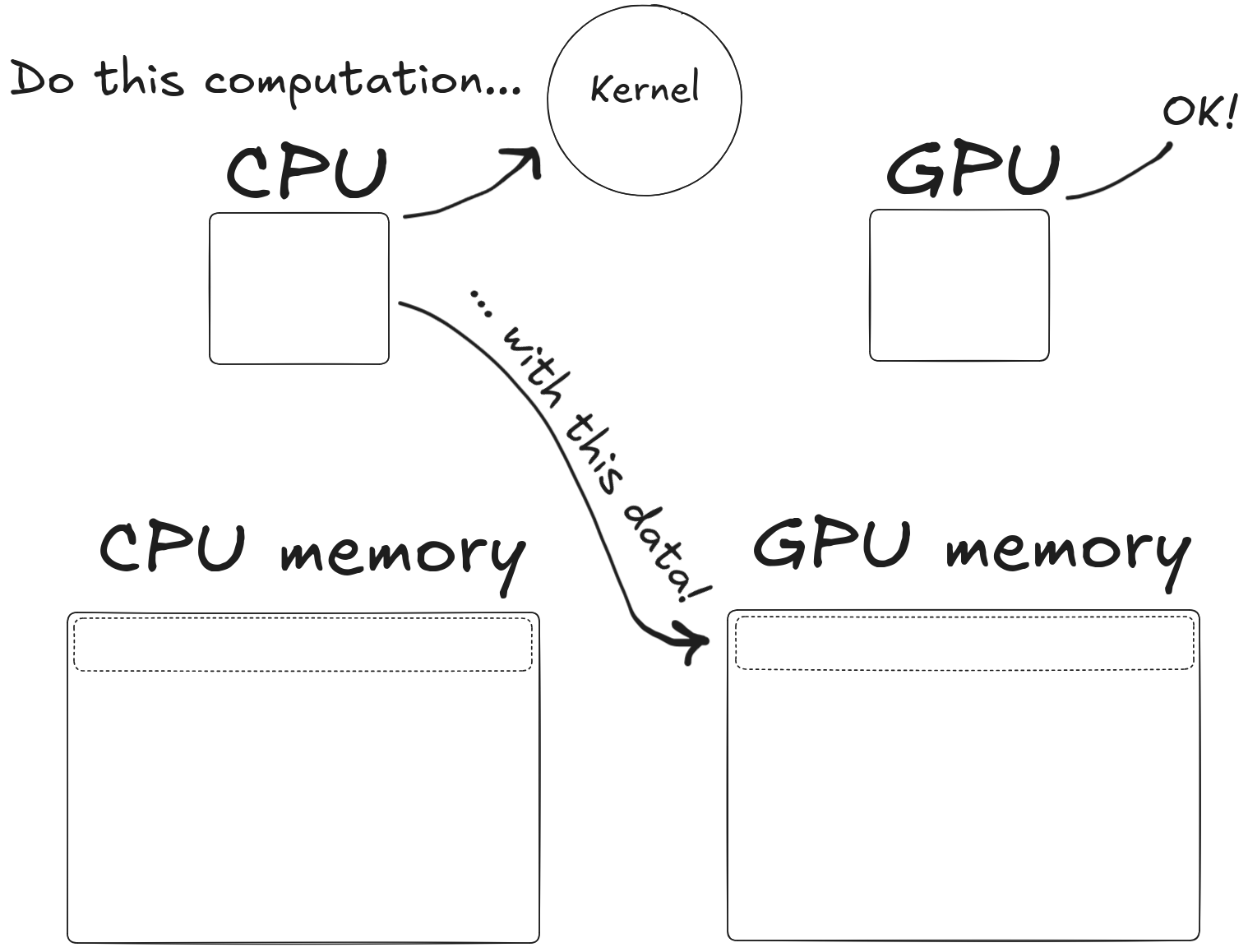
How do I use the GPU?

To use it, you have to

  1. Copy memory from CPU to GPU
  2. Tell the GPU what to do with that data
  3. Wait for the GPU to finish doing what you told it to do
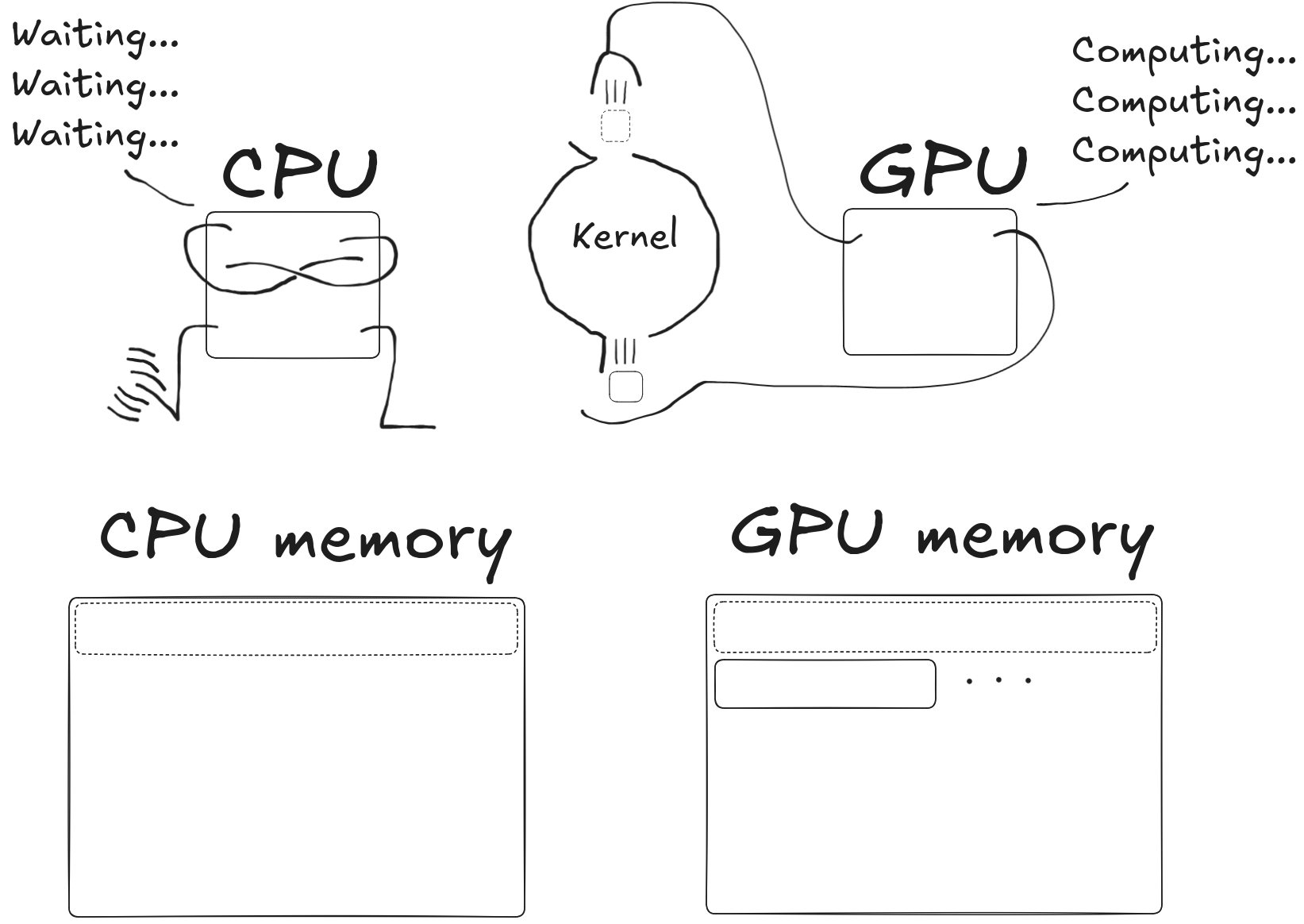
How do I use the GPU?

To use it, you have to

  1. Copy memory from CPU to GPU
  2. Tell the GPU what to do with that data
  3. Wait for the GPU to finish doing what you told it to do
  4. Copy memory from GPU back to the CPU

Why?

But why?

Why move data back and forth from CPU to GPU to CPU?

What’s the benefit?

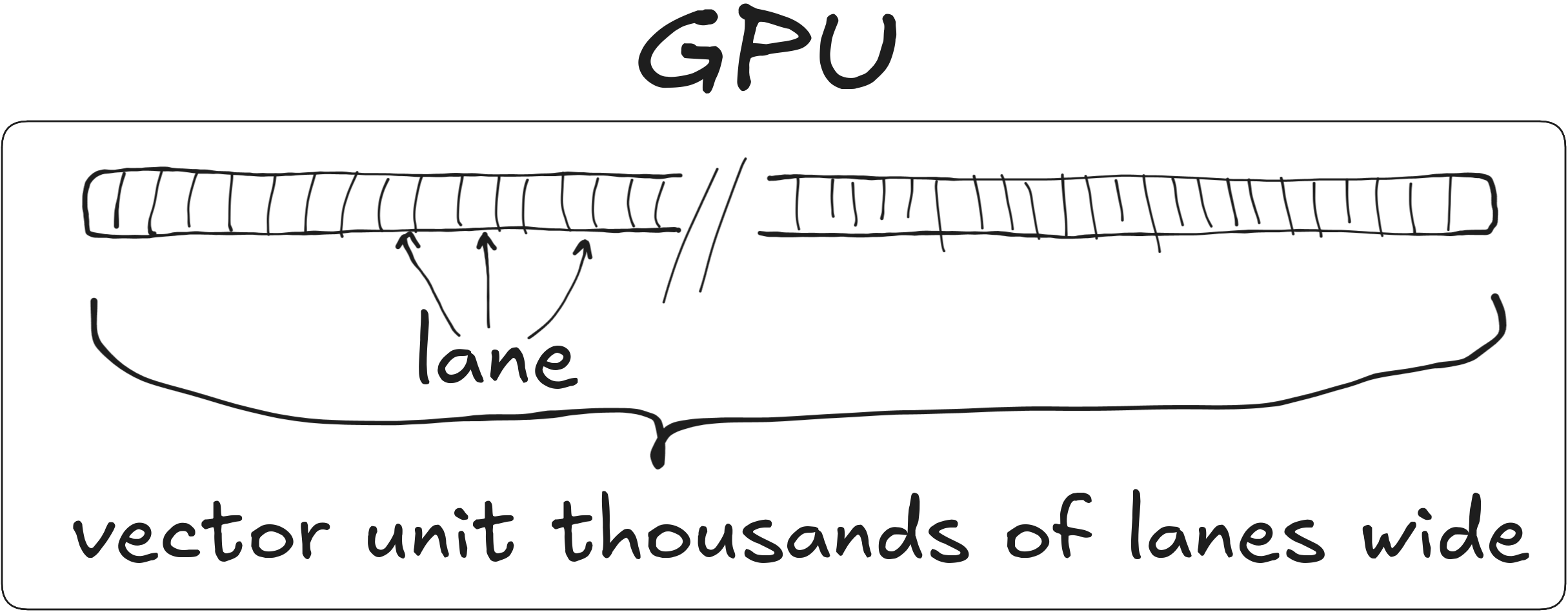
GPU as a wide SIMD unit

SIMD

  • SIMD = Single Instruction, Multiple Data
  • Same exact instruction (e.g. “integer add”) to multiple pieces of data
  • Throughput: Width of unit \(\times\) throughput of scalar unit
  • CPUs & GPUs both use SIMD

Scalar addition

Element-wise add for arrays a and b resulting in array c
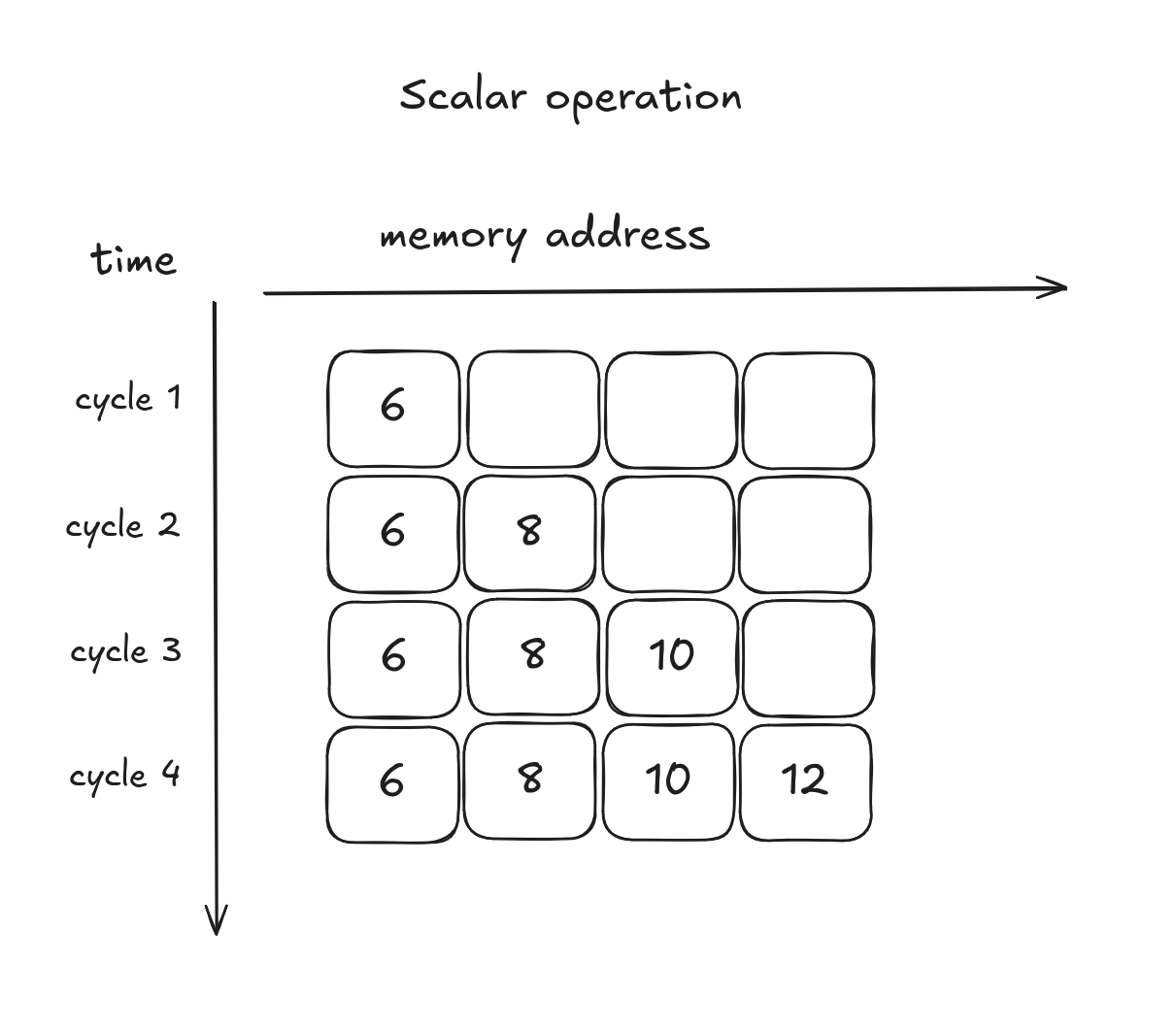


int a[4] = {1, 2, 3, 4};
int b[4] = {5, 6, 7, 8};
int c[4] = {0, 0, 0, 0};

for (int i = 0; i < 4; i++) {
    c[i] = a[i] + b[i];
}
printf("{}", c); // "6, 8, 10, 12"

4 cycles, 4 elements: throughput = 1

SIMD addition

Element-wise add for arrays a and b resulting in array c
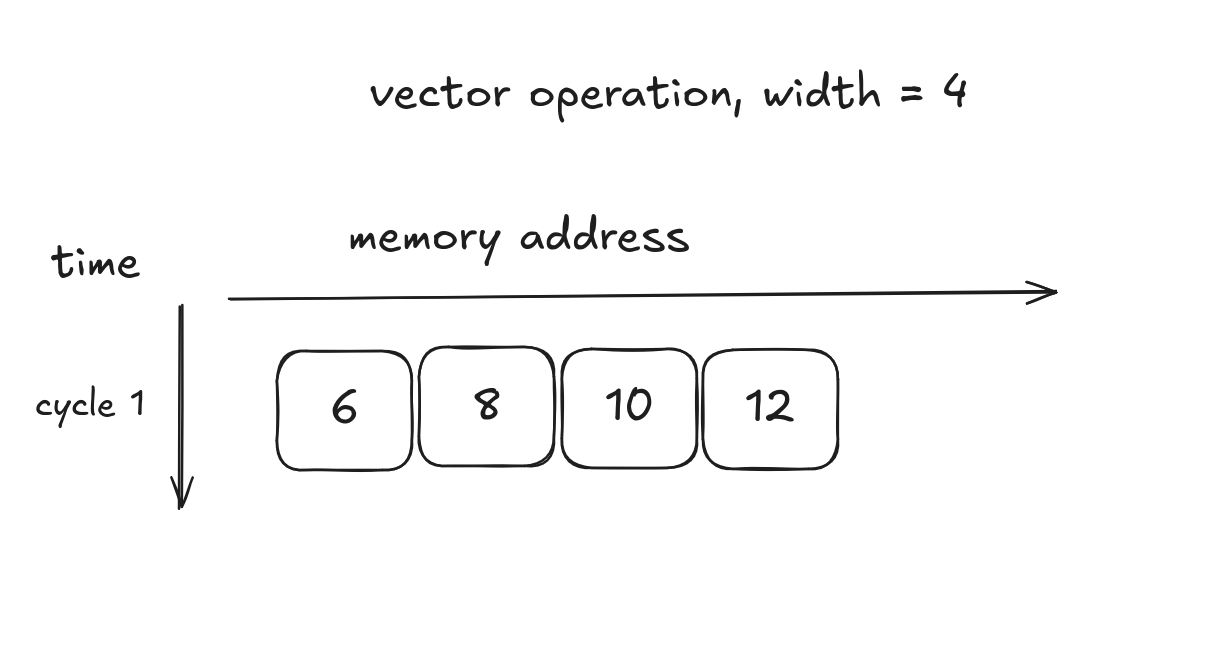


int a[4] = {1, 2, 3, 4};
int b[4] = {5, 6, 7, 8};
int c[4] = {0, 0, 0, 0};

simd_add(a, b, c);
printf("{}", c); // "6, 8, 10, 12"

1 cycle, 4 elements: throughput = 4

Which is faster, CPU or GPU?

It takes time to

  • Move data to the GPU
  • Compute on the GPU
  • Move results to the CPU

So is it faster to use the CPU or the GPU?

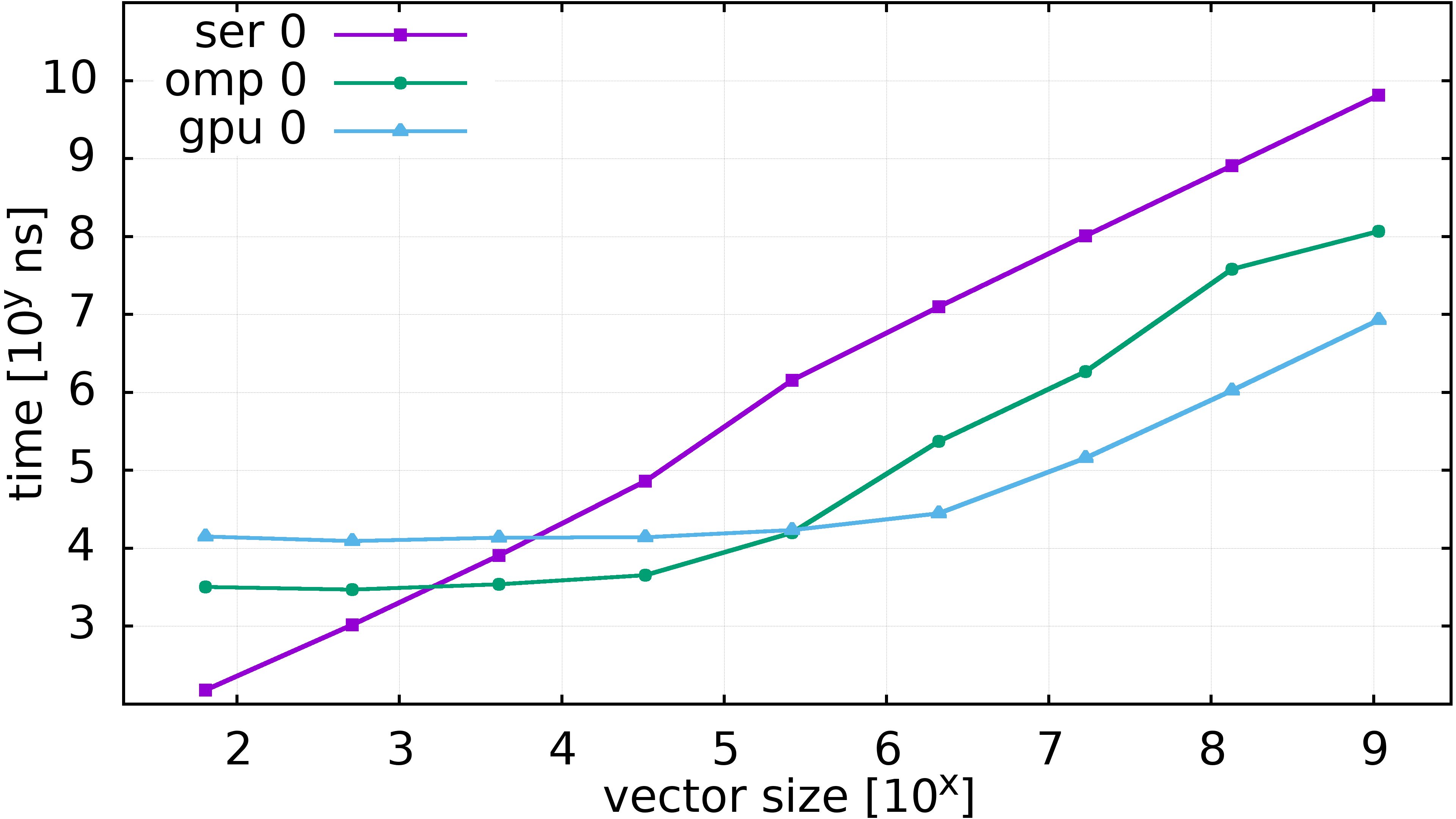
Runtimes of Taylor expansion, little computation

  • \(y_i \gets \sum_{n = 0}^{0} \frac{x_i^n}{n!}\)
  • \(i = 1\dots\) vector size
  • Only 1 term (“\(x^0\)”) but do the arithmetic
  • Init \((x_1,\dots)\) on device (GPU)
  • Starting always on CPU memory would make CPU faster!
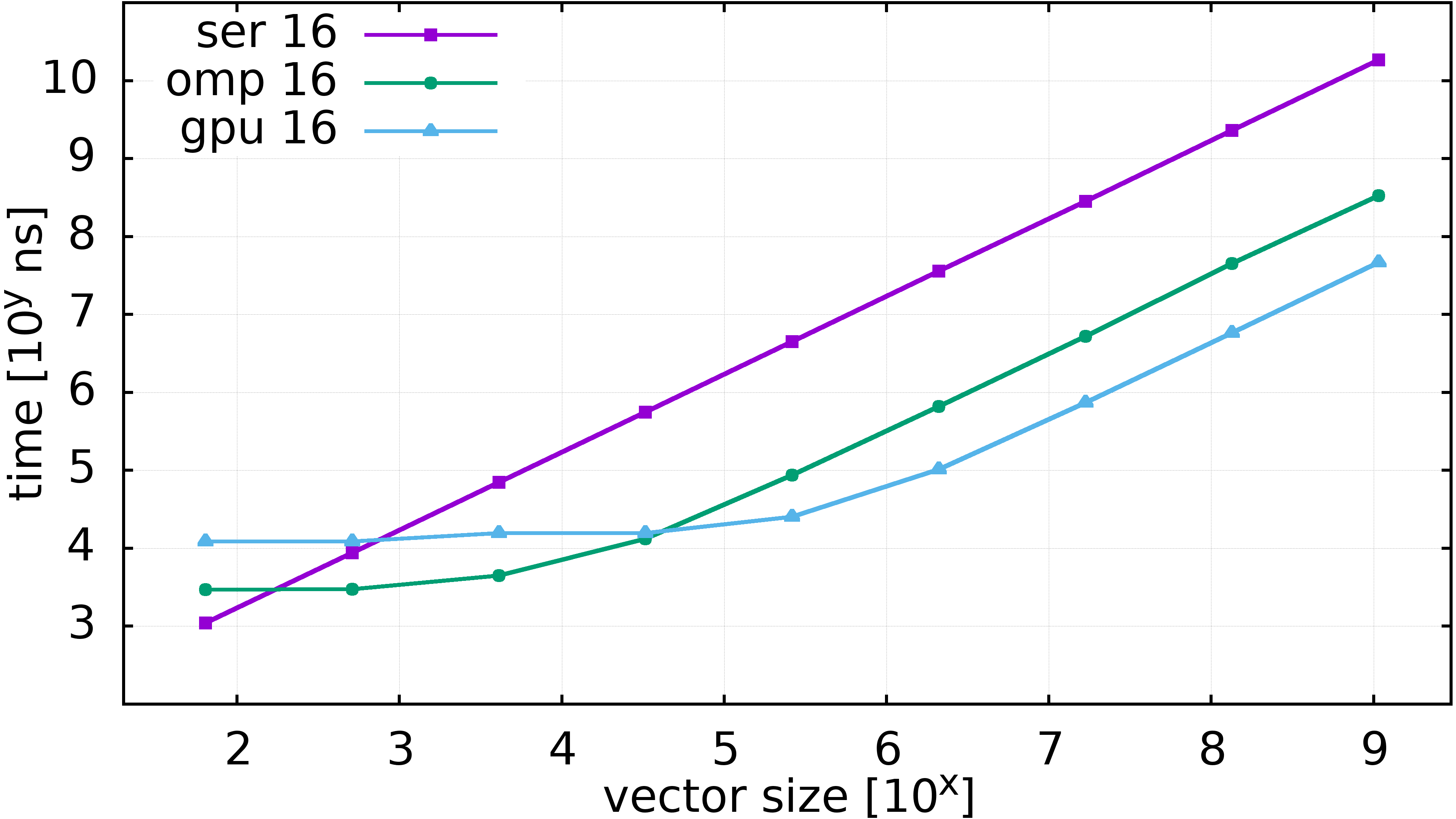
Runtimes of Taylor expansion, more computation

  • \(y_i \gets \sum_{n = 0}^{16} \frac{x_i^n}{n!}\)
  • Compute units are not mostly waiting for data
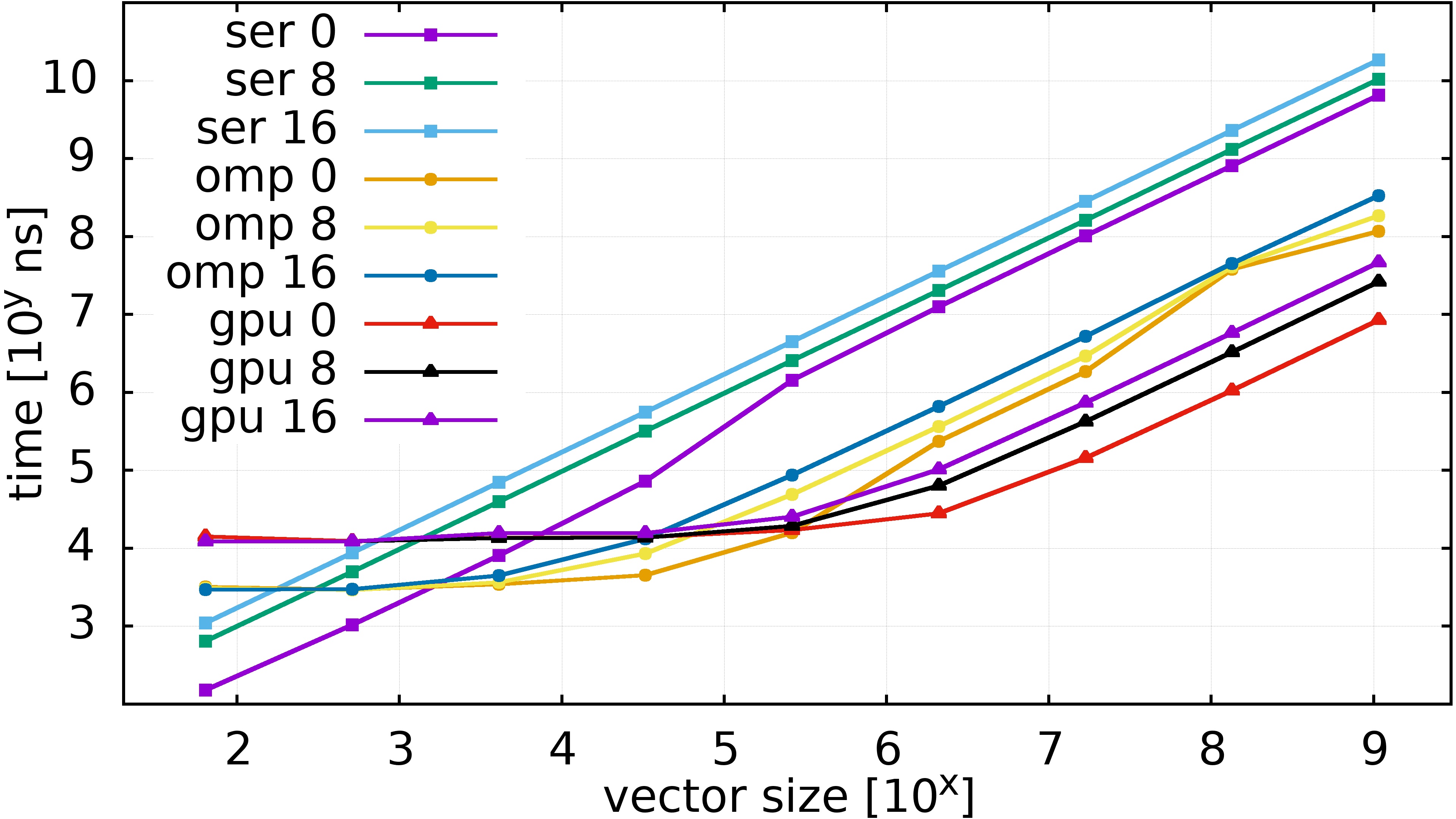
Runtimes of Taylor expansion, \(N=0,8,16\)
Recap

  • massively parallel processor
  • own memory space –> requires data movement
  • performs instructions to multiple pieces of data at the same time
  • useful when you have a lot of data

Part 2: Model of GPU Hardware

GPU as a wide SIMD unit


32 operations

1024 lanes

Utilization: \[ 32 / 1024 = 1 / 32 \approx 3\% \]
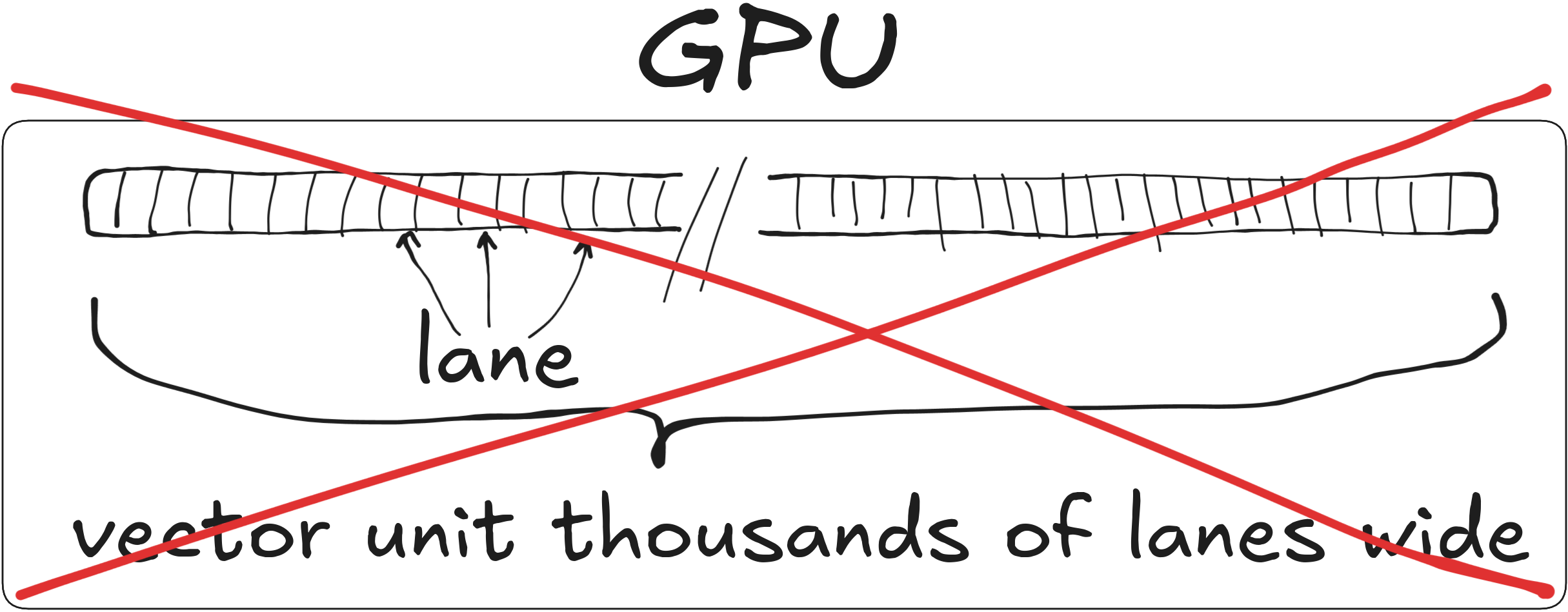
GPU as a collection of independents vector units
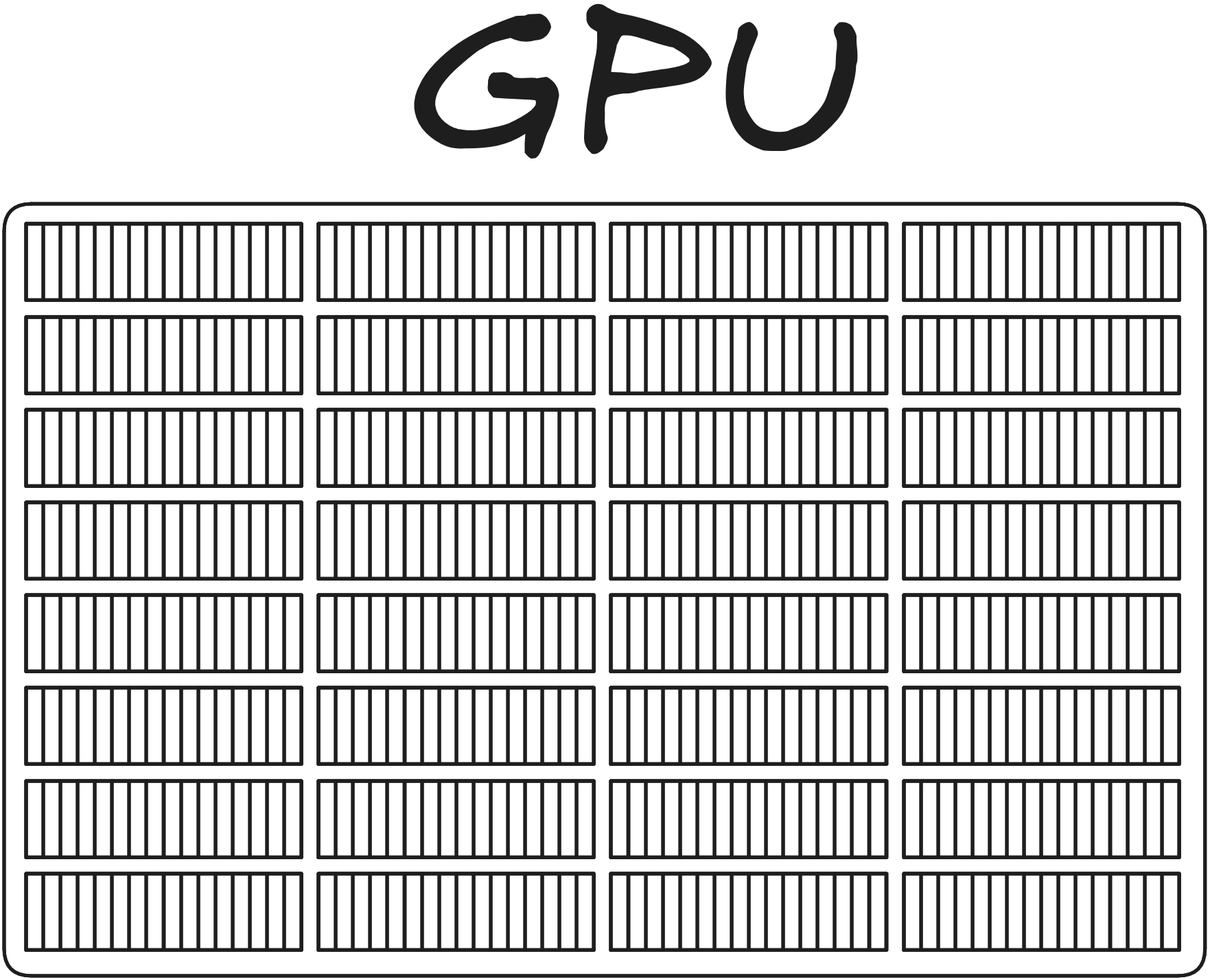
32 vector units
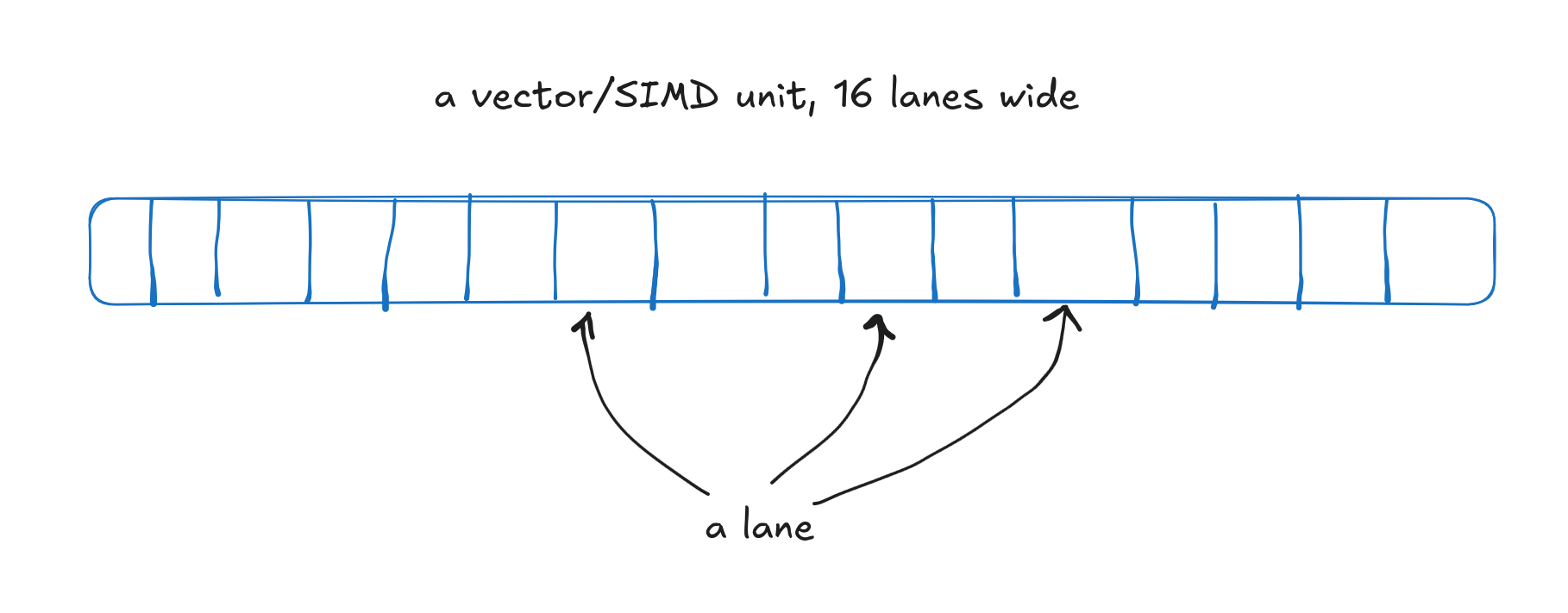
A vector unit, 16 lanes wide

GPU as a collection of independents vector units
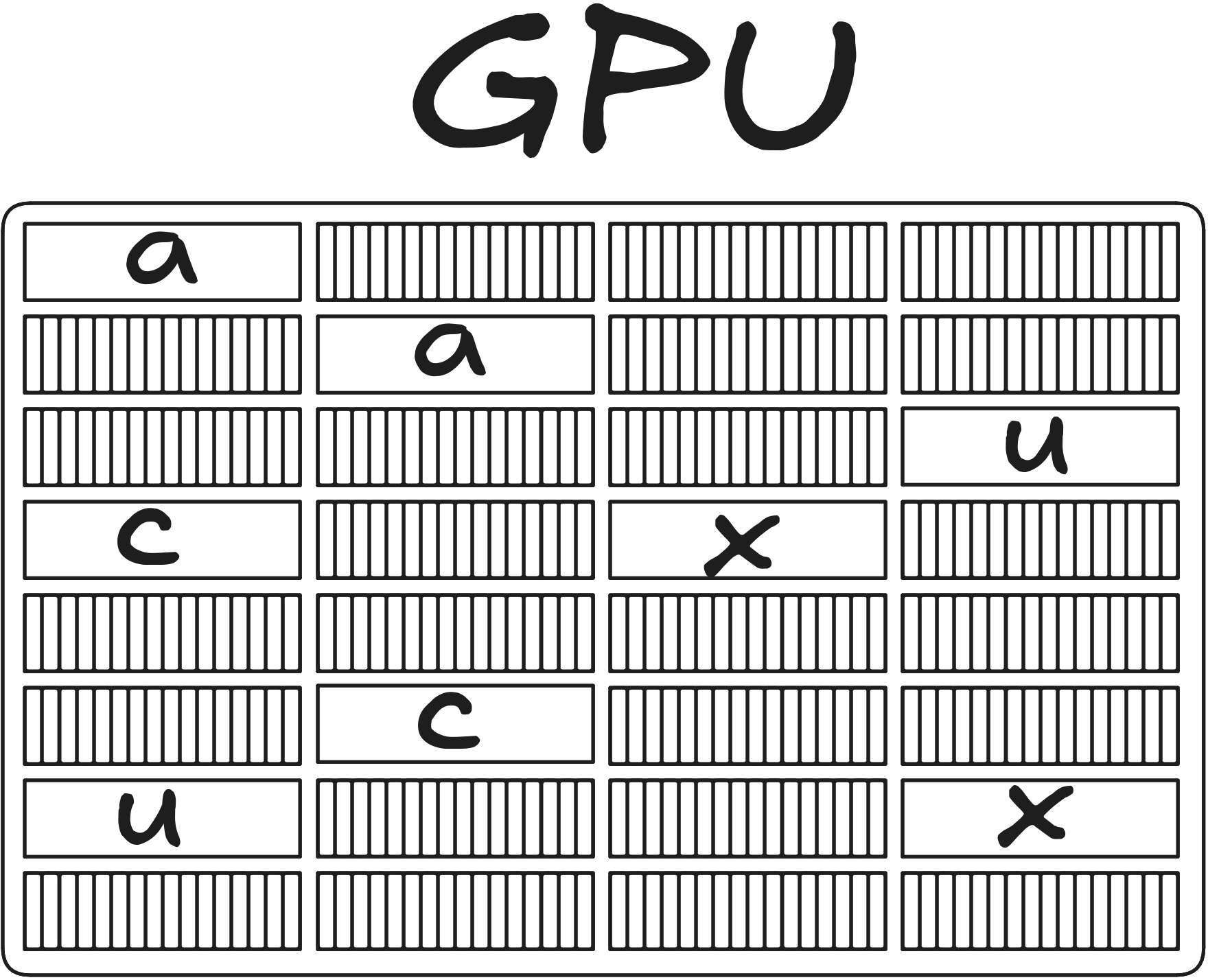
32 vector units, executing different instructions

A vector unit, 16 lanes wide

Who controls the vector units?

Hand written SIMD for CPUs

// Multiply 8 floats by another 8 floats
// on the CPU, using SIMD.
template<int offsetRegs>
inline __m256 mul8(const float* p1, const float* p2)
{
    constexpr int lanes = offsetRegs * 8;
    const __m256 a = _mm256_loadu_ps(p1 + lanes);
    const __m256 b = _mm256_loadu_ps(p2 + lanes);
    return _mm256_mul_ps(a, b);
}

Source

  • Could do the same on the GPU using (hardware vendor specific) assembly-like language
  • More common to use higher level APIs like Cuda/HIP/Sycl
  • SIMT = Single Instruction, Multiple Threads

Who controls the vector units?

Is this realistic?

Who controls the vector units?
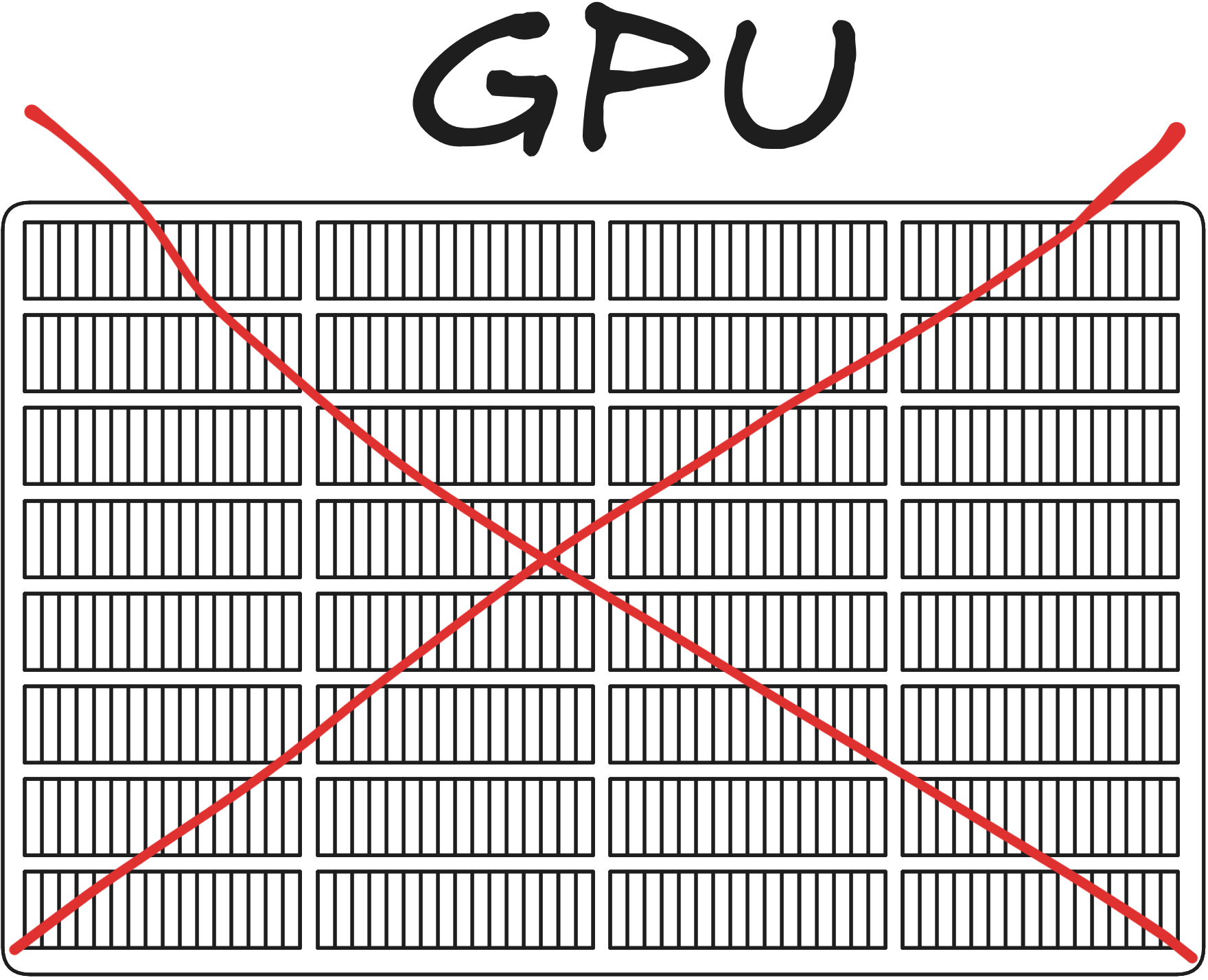
No

GPU as a collection of processors
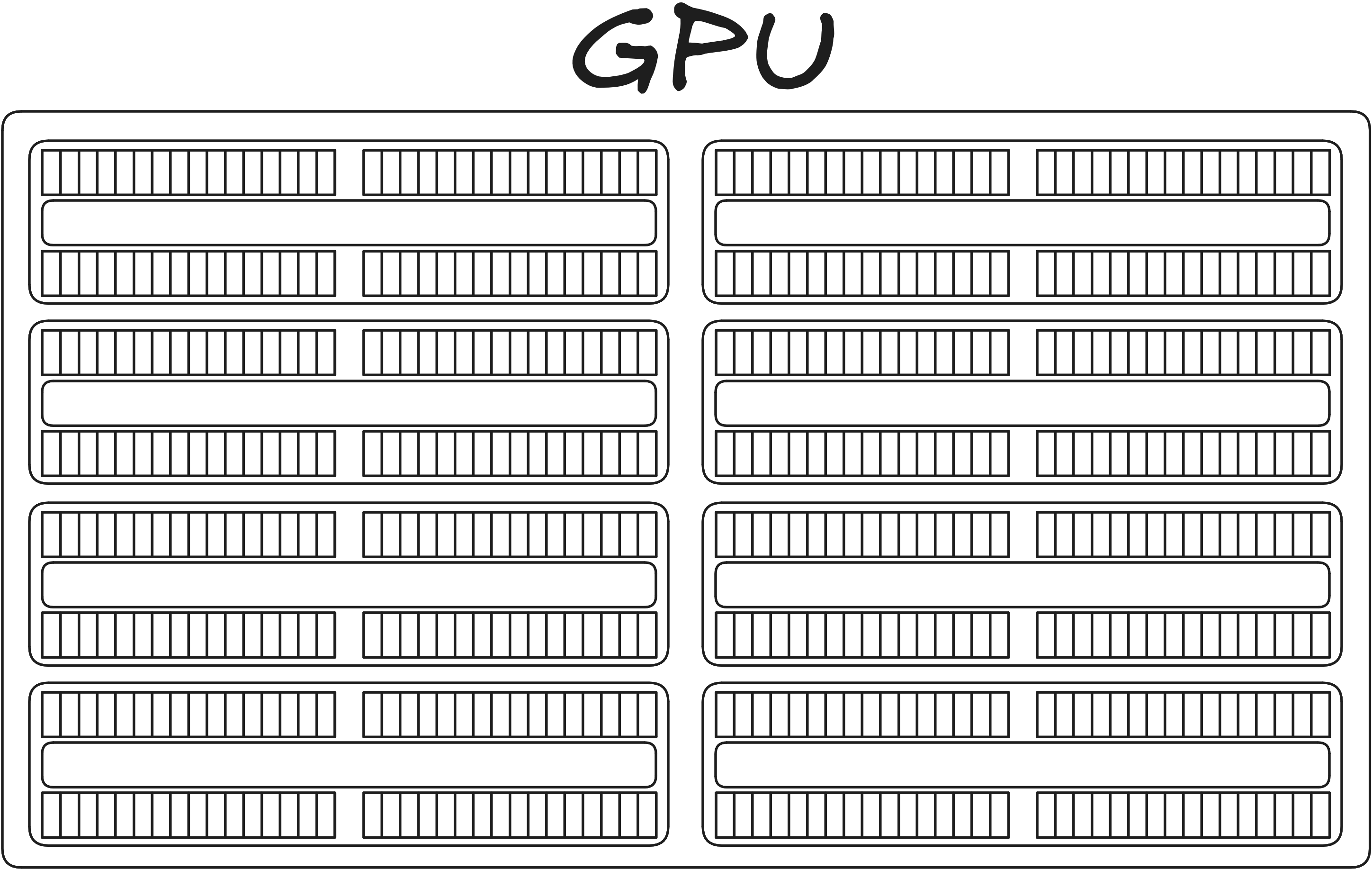
Tens or hundreds of simple processors (this model has 8)
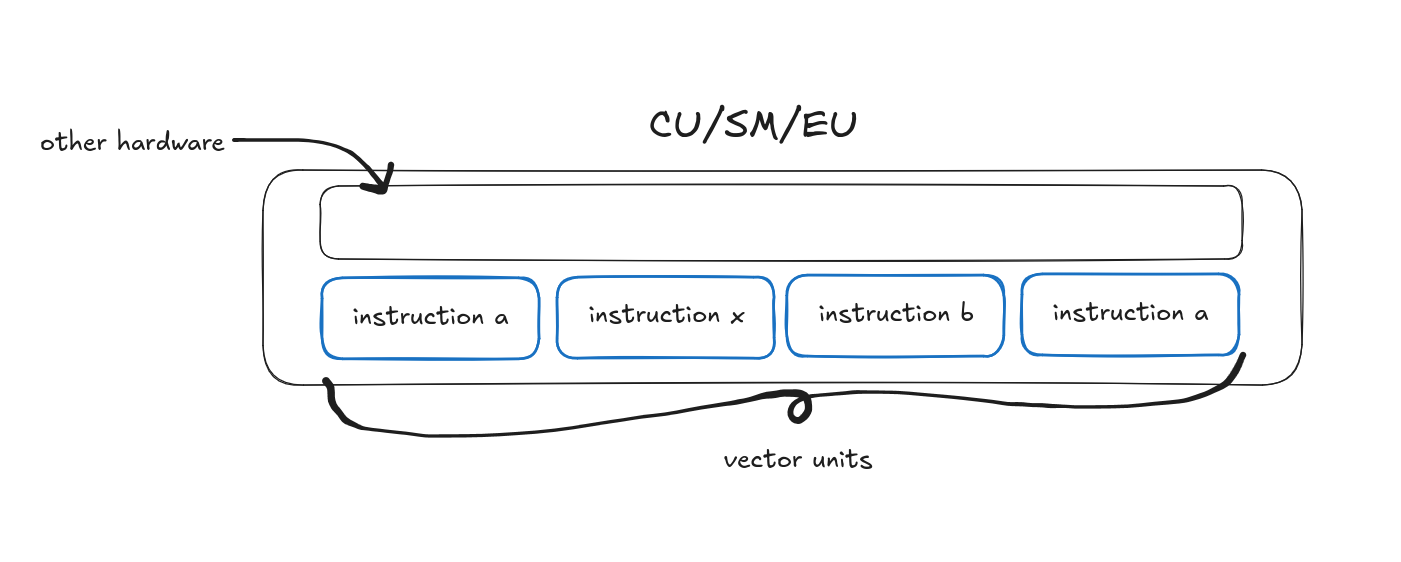
  • CU = Compute Unit (AMD)
  • SM = Streaming Multiprocessor (Nvidia)
  • EU = Execution Unit (Intel)

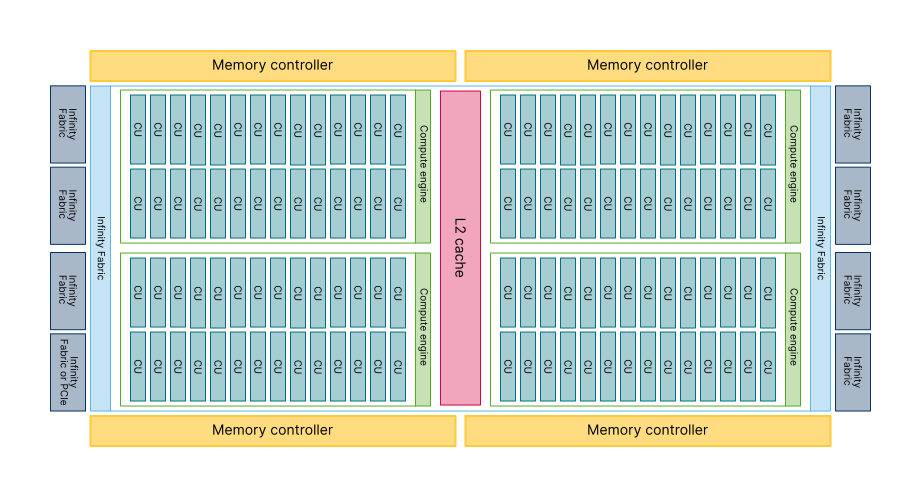
MI250X

  • CUs
  • memory
  • links to other hardware

Image: LUMI consortium

MI250X, Compute Unit
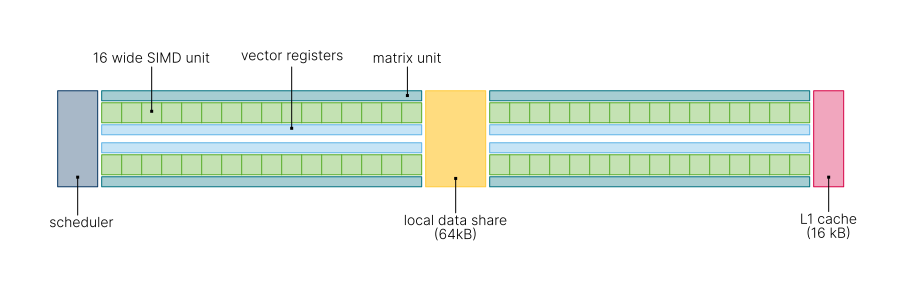


  • 4 “SIMD-units”
    • four sets of 16 SIMD lanes and matrix units
  • local data share (LDS)
  • L1 cache
  • scheduler
  • other hardware

Image: LUMI consortium

H100
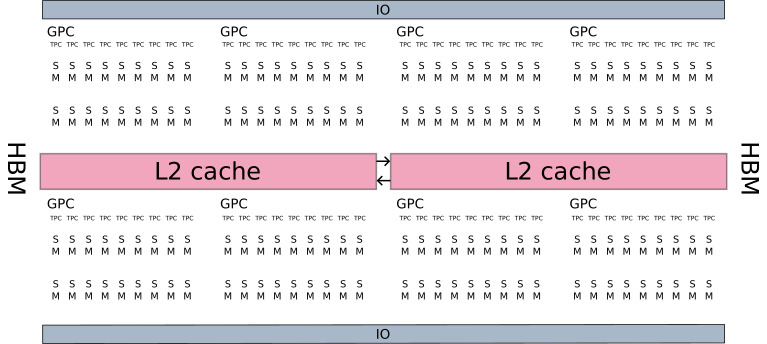
  • streaming multiprocessors (SM)
  • memory
  • links to other hardware

H100, Streaming Multiprocessor
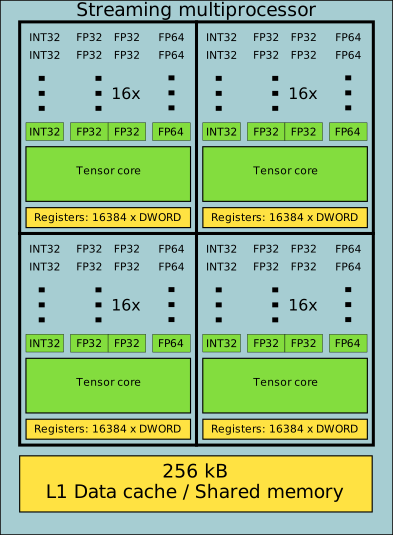
  • four SM sub-partitions (SMSP)
    • cores for INT32, FP32, FP64
    • \(\sim\) SIMD lanes
  • L1 Cache (max 128 kB) / Shared memory (max 228 kB)
  • other hardware (scheduler, instruction cache etc)

Recap

GPU

  • is a massively parallel processor
  • has (typically) dedicated memory space \(\longrightarrow\) (typically) explicit data movement
  • has \(10^1 \dots 10^2\) of simple processors, multiple vector units per processor
  • does \(10^1\dots 10^2\times\) more instructions per cycle than CPUs

Part 3: Programming GPUs

Programming GPUs

  • SIMT = Single Instruction, Multiple Threads
  • Write parallel code from the perspective of a single thread

Programming GPUs

  • Context: Execute some code over the size of the arrays using a double loop
  • Single thread point of view: Perform addition of two elements \(c_{ij} = a_{ij} + b_{ij}\)
void sum_arrays(
    float** a,
    float** b,
    float** c,
    int N,
    int M)
{
    for (int i = 0; i < N; i++) {
        for (int j = 0; j < M; j++) {
            c[i][j] = a[i][j] + b[i][j];
        }
    }
}

Programming GPUs

  • No double loop: “someone else” takes care of it
  • Just index “fetching” and the operation \(c_{ij} = a_{ij} + b_{ij}\)

GPU version

void sum_arrays(float** a, float** b, float** c) {
    const int i = my_global_i();
    const int j = my_global_j();
    c[i][j] = a[i][j] + b[i][j];
}

Division of responsibilities

Our responsibility: how many threads, in what configuration

  • 32768 threads in 1D
  • 32 x 1024 threads in 2D
  • 32 x 512 x 2 threads in 3D

Device’s responsibility: launch enough threads and call the supplied code for each

Thread hierarchy

Thread hierarchy, previous is the building block of the next level

  • a thread
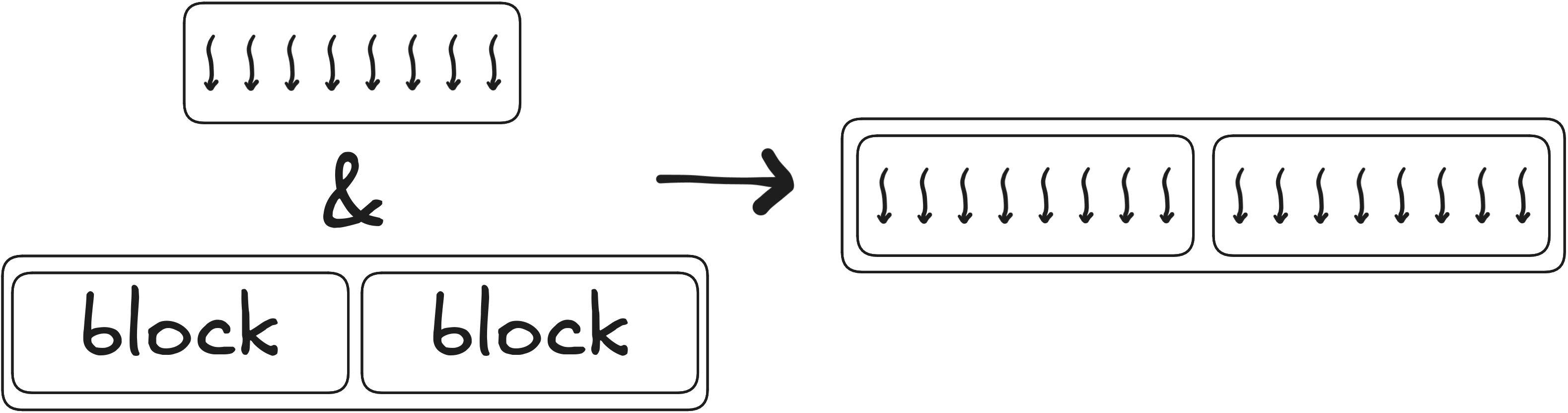
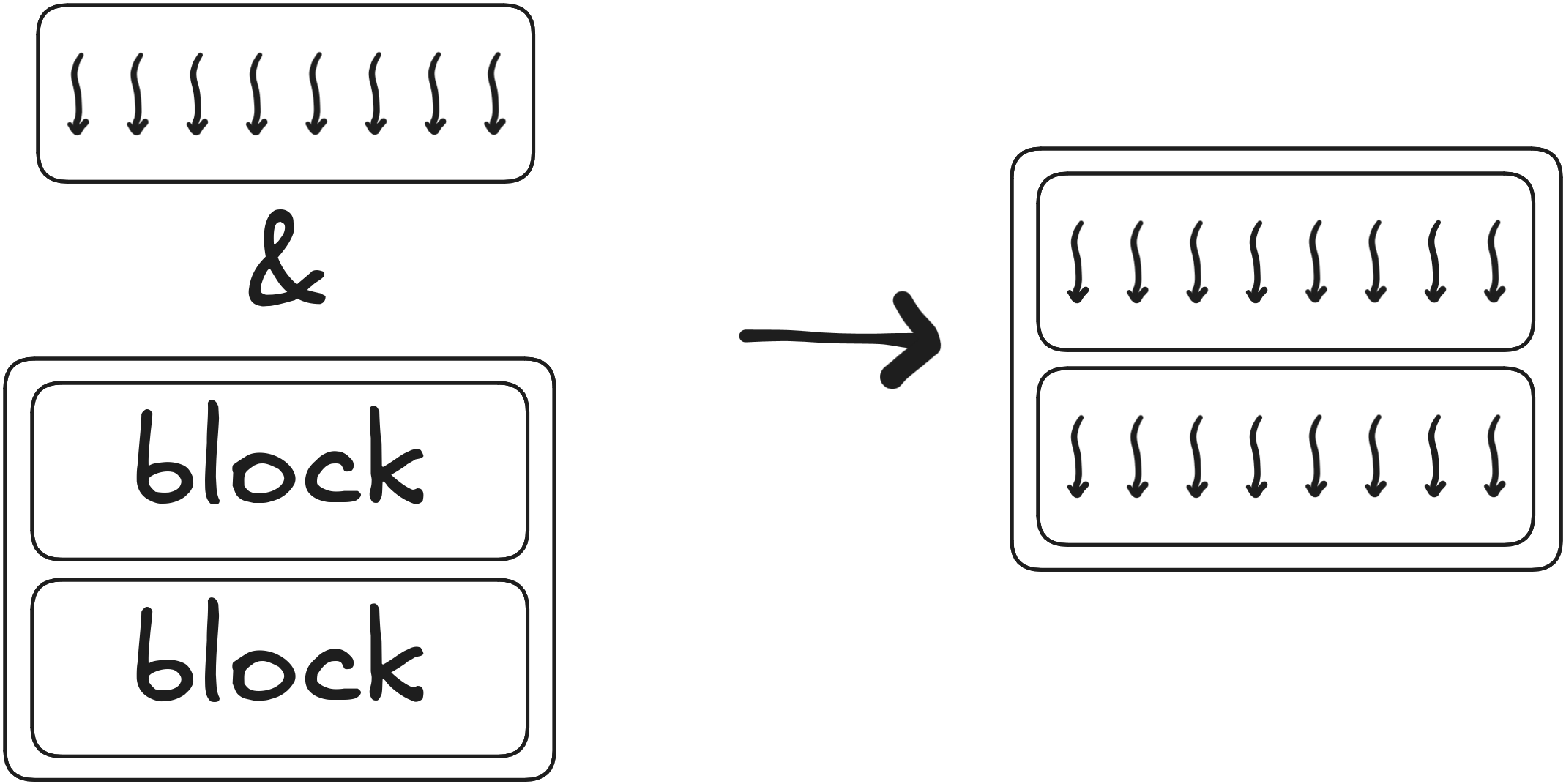
  • a block of threads
  • a grid of blocks

Thread

A single thread is the smallest unit

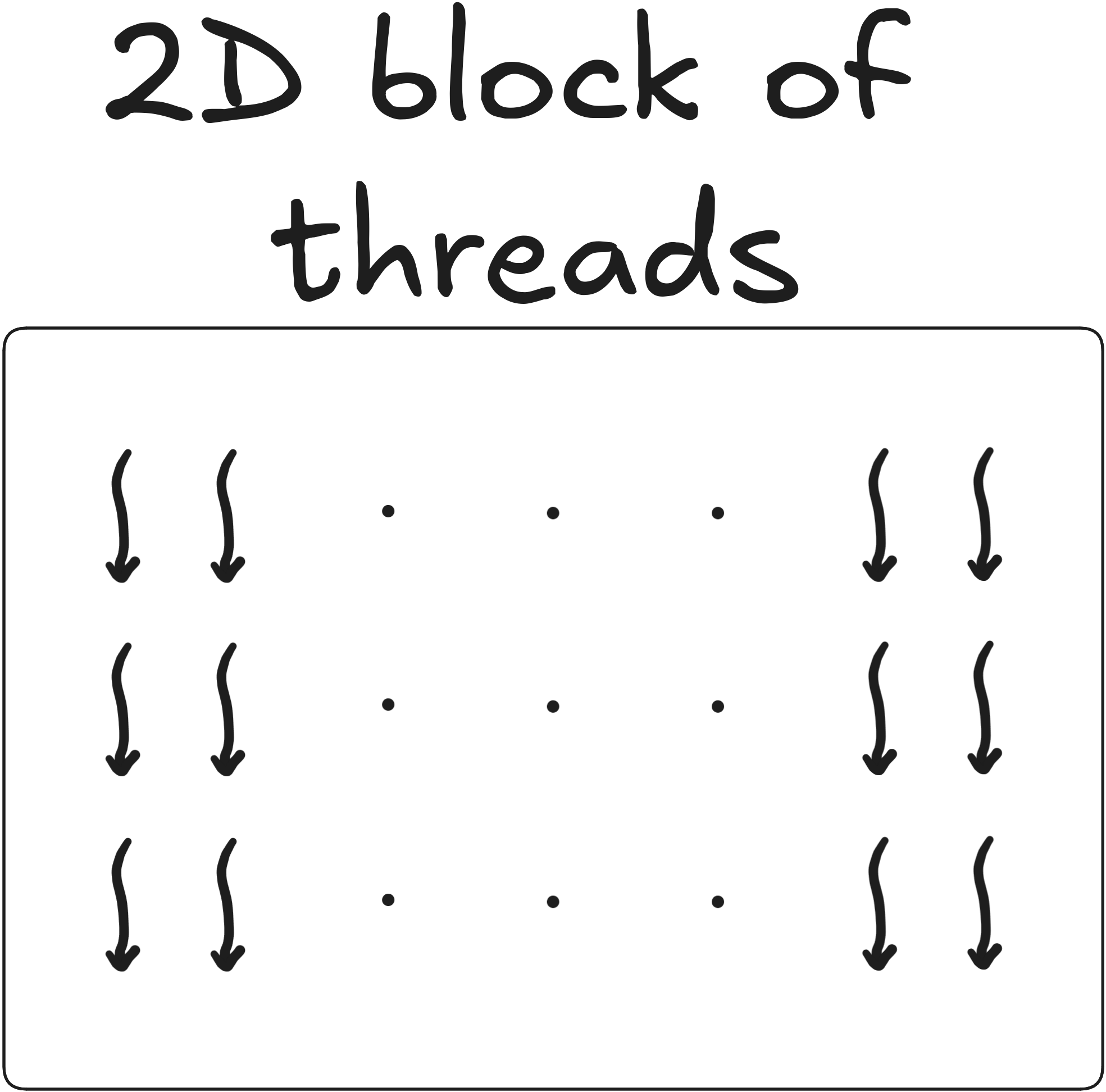
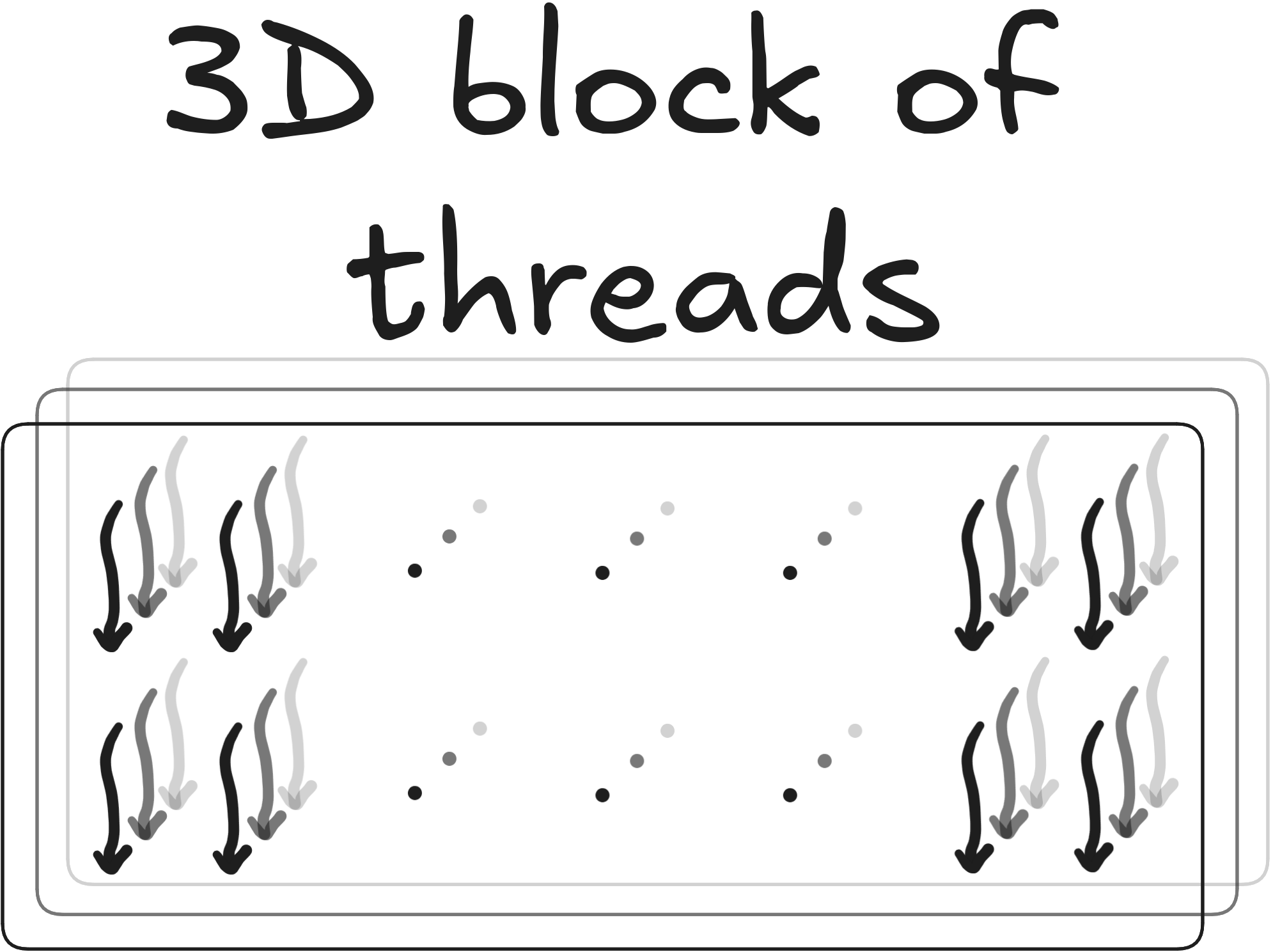
Block of threads

A block of threads can be 1D, 2D or 3D

// This struct is defined elsewhere by the API
struct dim3 {
    int32_t x;
    int32_t y;
    int32_t z;
};

// ------------------------
// In our program we define
// the size of the block:
dim3 block(1024, 1, 1); // 1D
dim3 block(128, 3, 1);  // 2D
dim3 block(256, 2, 3);  // 3D

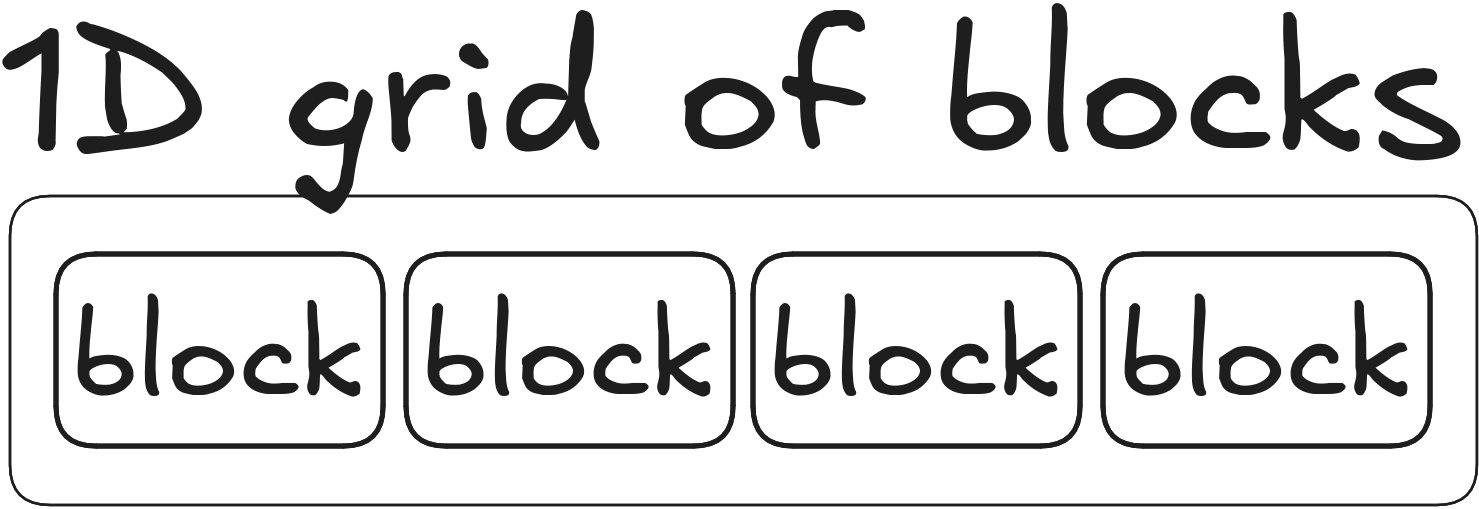
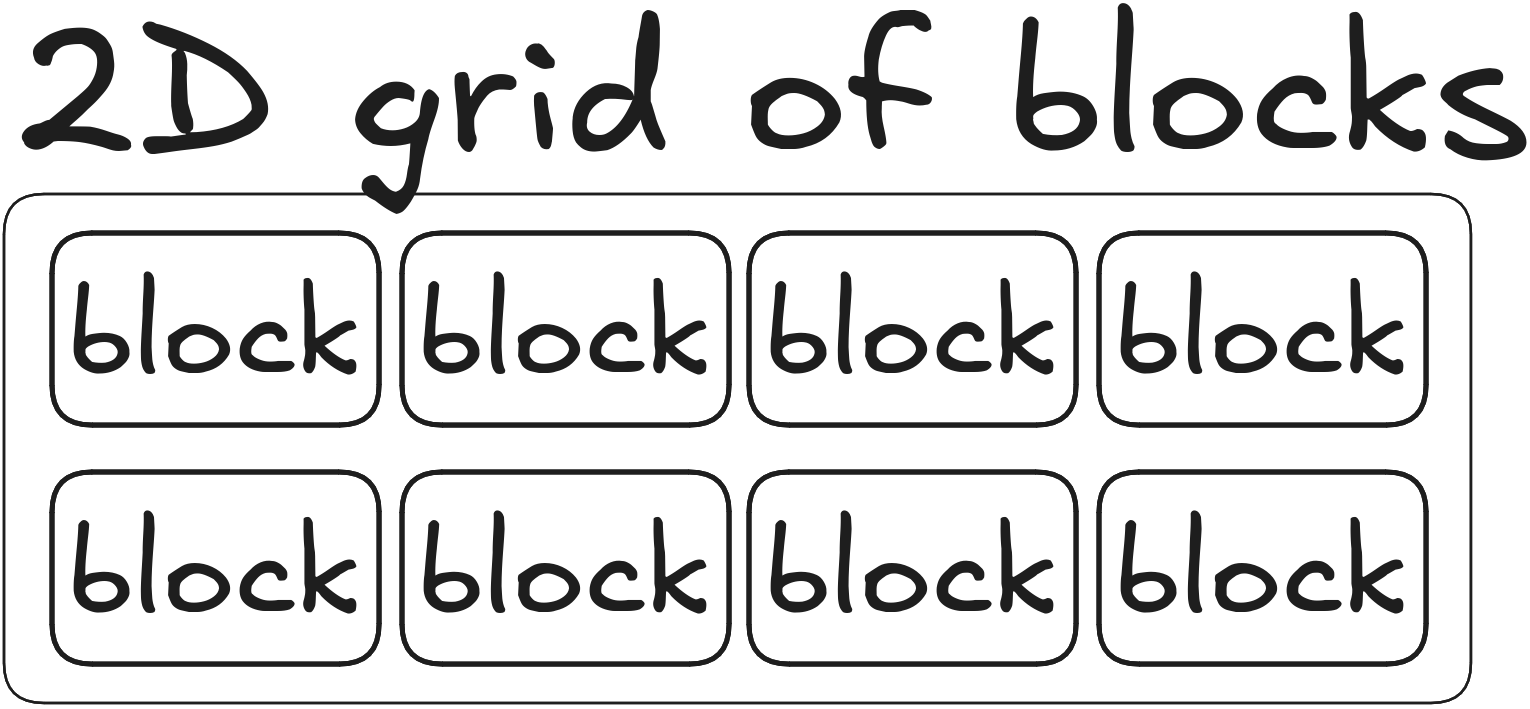
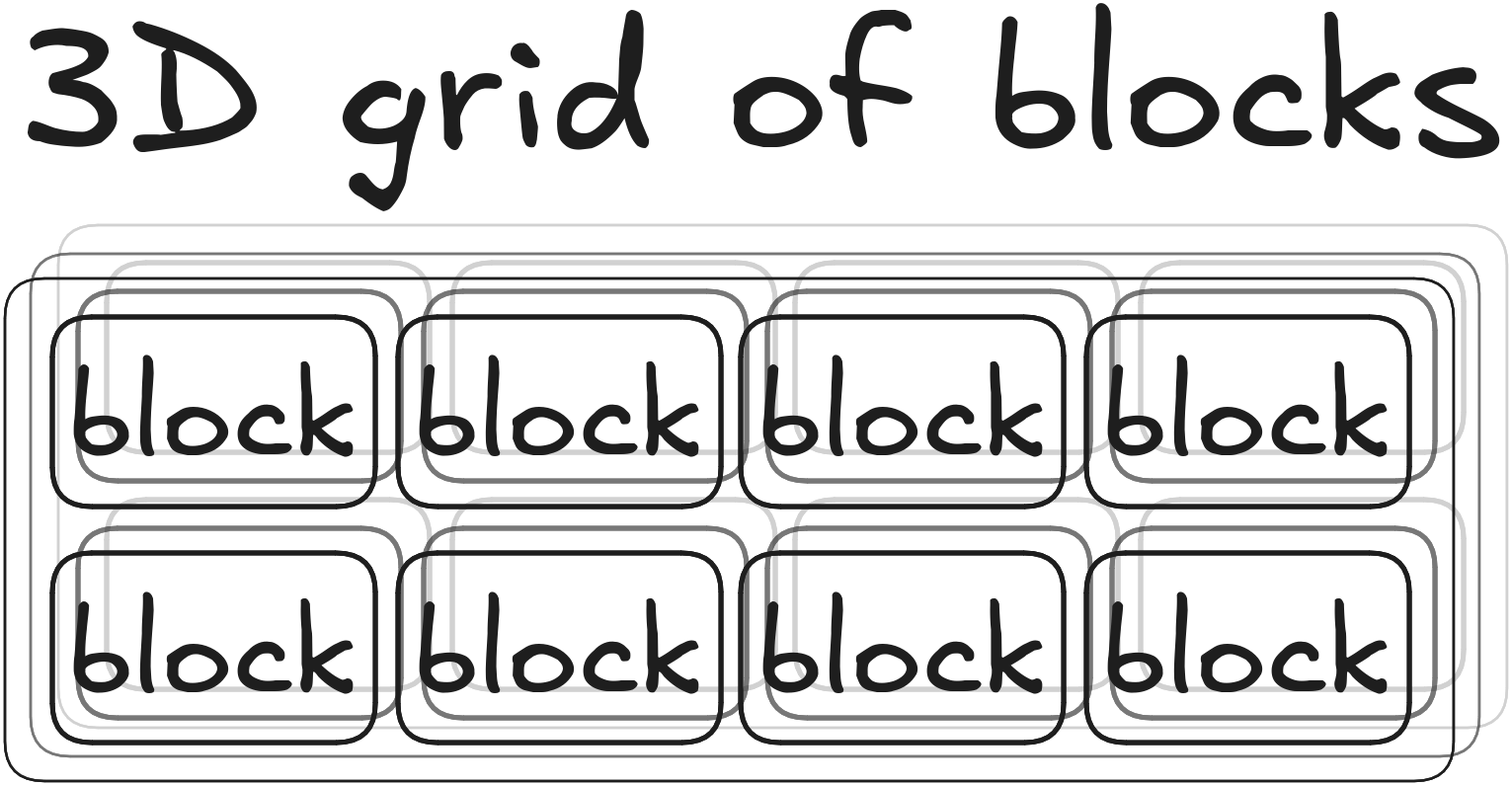
Grid of blocks

A grid of blocks can be 1D, 2D or 3D

// The same struct is used for
// block size and grid size
struct dim3 {
    int32_t x;
    int32_t y;
    int32_t z;
};

// ------------------------
// In our program we define
// the size of the grid:
dim3 grid(4, 1, 1); // 1D
dim3 grid(4, 2, 1); // 2D
dim3 grid(4, 2, 4); // 3D
Threads, blocks, grids

dim3 block(128, 4, 1);
dim3 grid(32, 32, 1);
// Num threads = 4096 x 128 x 1 = 524288

// The code in "someKernel" is run
// with 524288 threads
someKernel<<<grid, block>>>(arguments);
// We'll cover this^ special syntax later
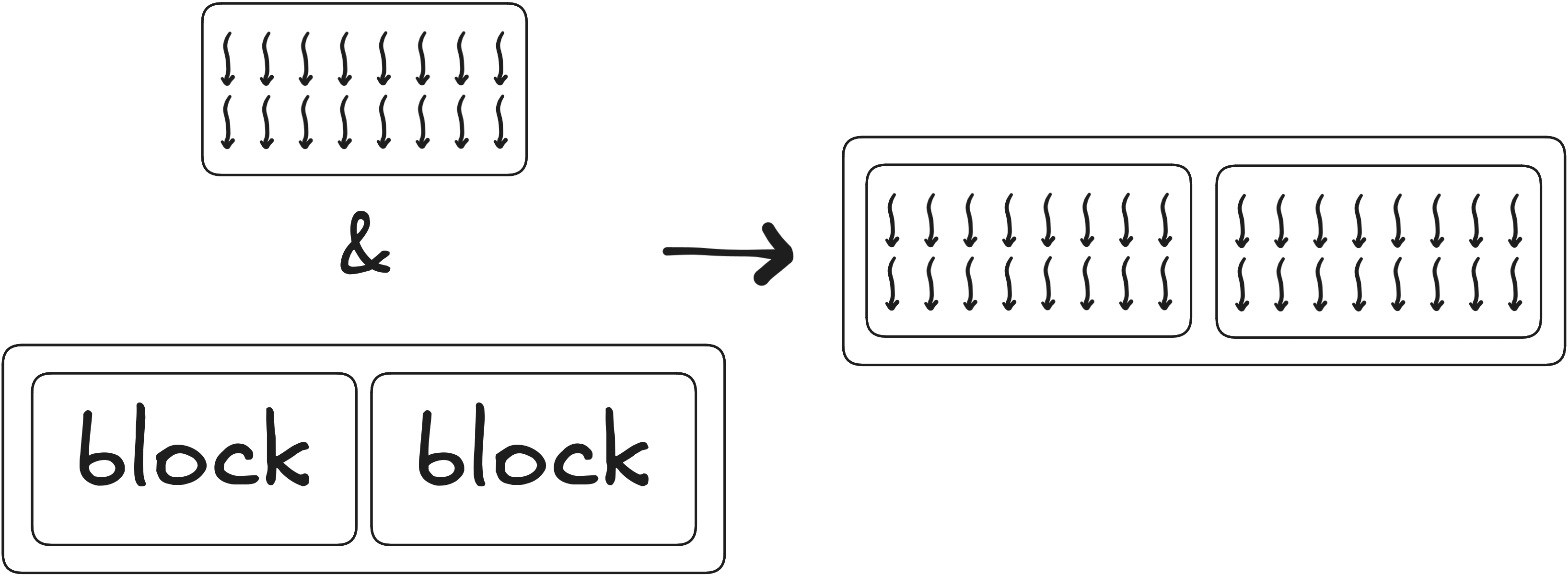
  • threads/grid = threads/block \(\times\) blocks/grid
  • device always operates over grids

Example grids 1

Example grids 2

Example grids 3
Part 4: Software – Hardware mapping

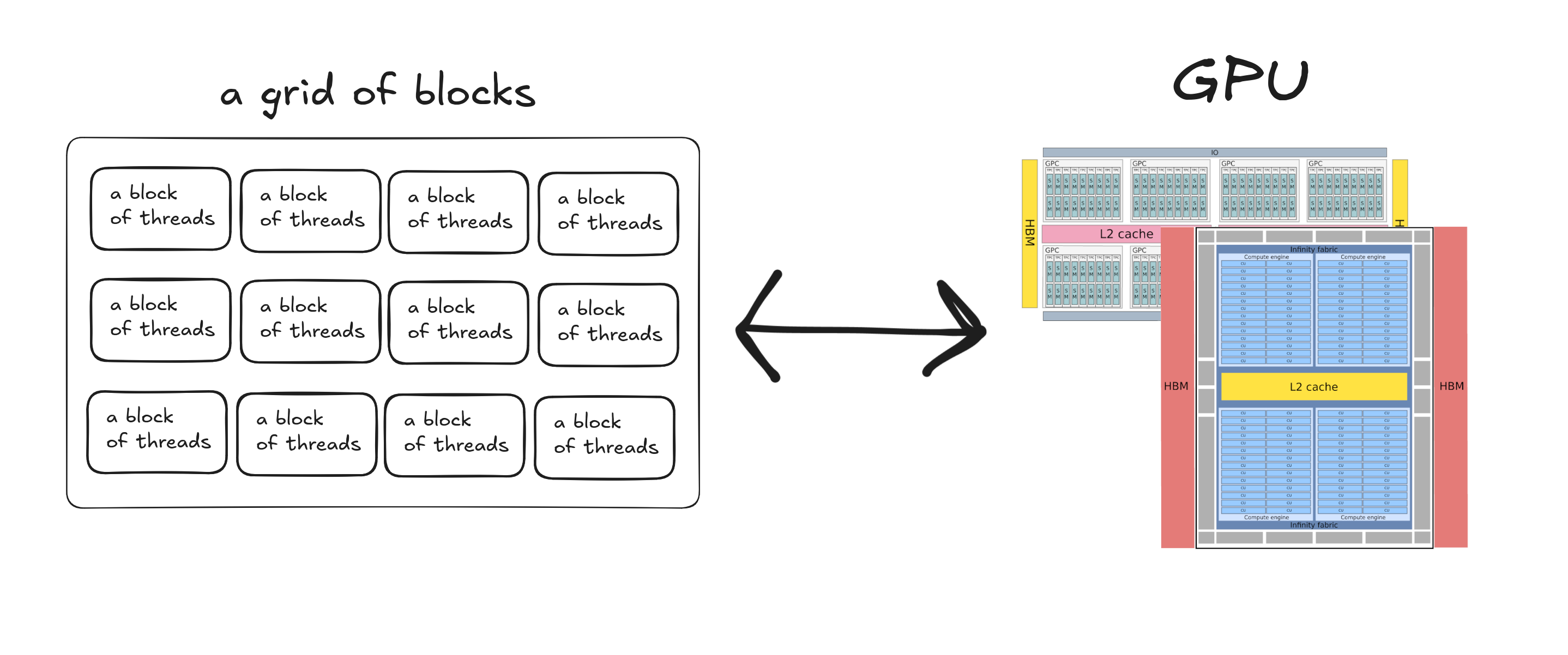
Grid – Device

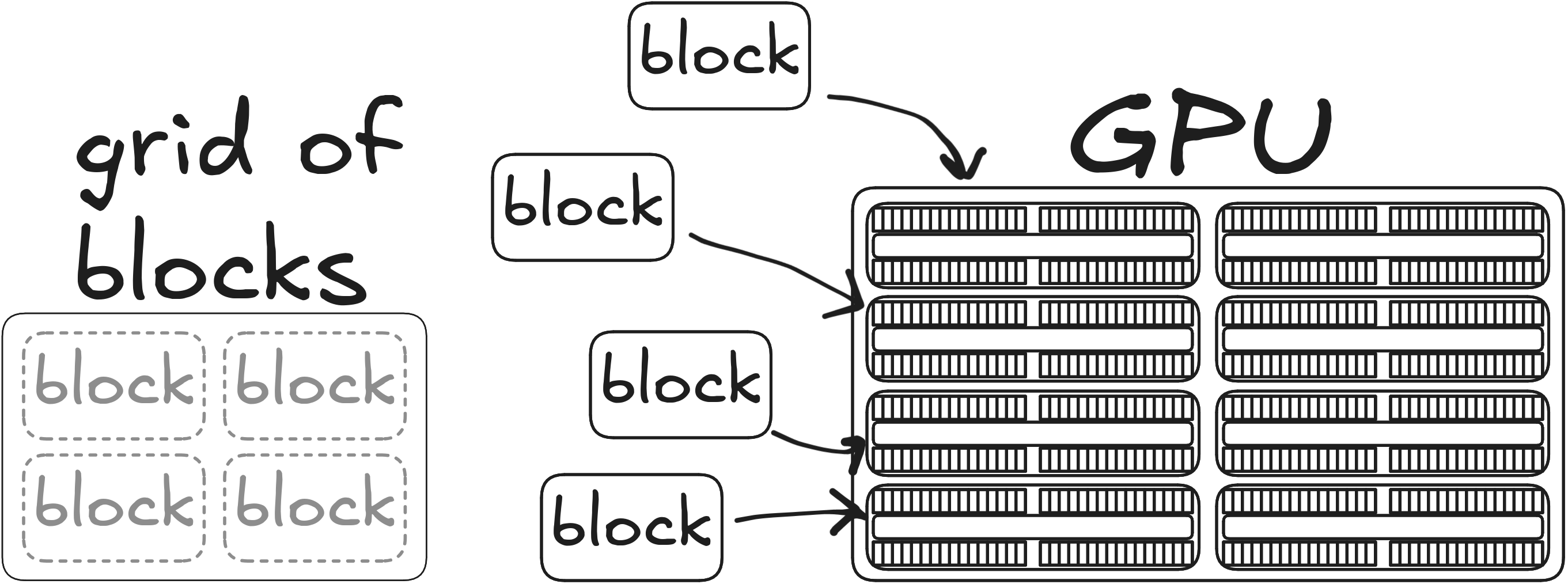
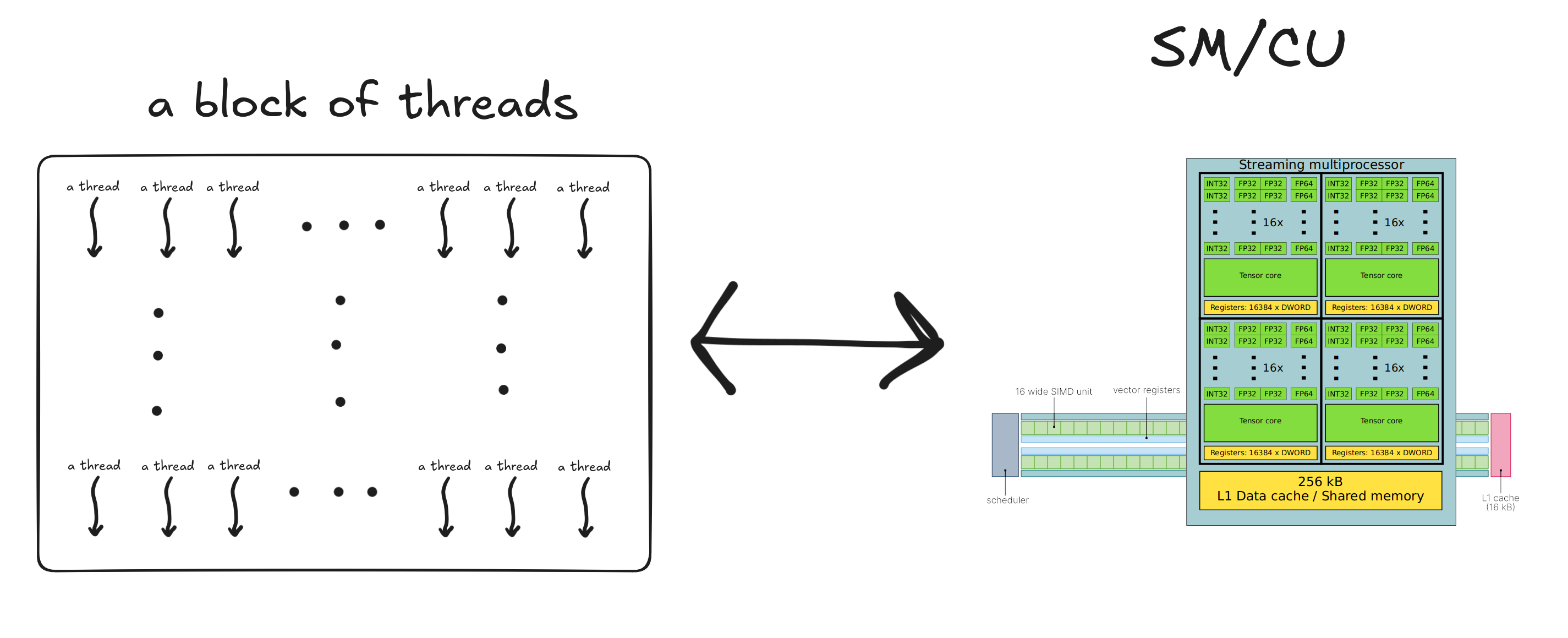
Block – SM/CU

Blocks – SM/CU
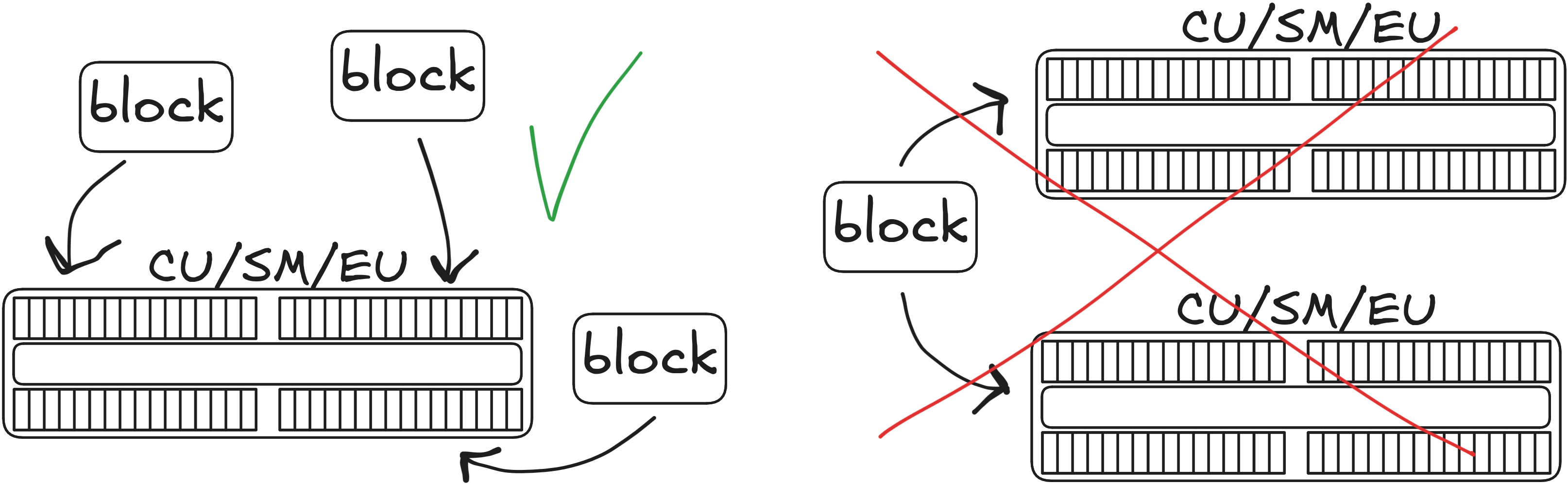
Block – SM/CU
Warps, wavefronts
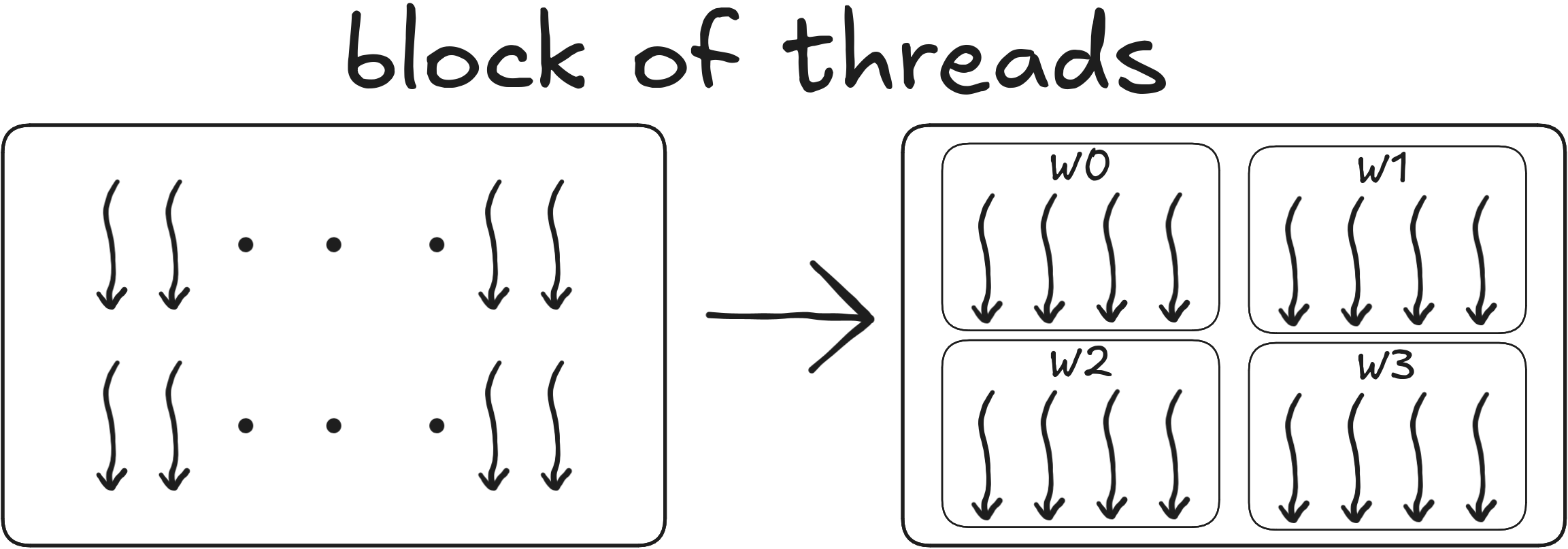
SM/CU breaks blocks of threads to

  • warps of 32 consecutive threads (Nvidia), or
  • wavefronts of 64 consecutive threads (AMD)

A 1D block of 256x1 threads gets partitioned to

warp/wavefront ID thread ID (Nvidia) thread ID (AMD)
w0 0-31 0-63
w1 32-63 64-127
w2 64-95 128-191
w3 96-127 192-255
w4 128-159 -
w5 160-191 -
w6 192-223 -
w7 224-255 -

Warps, wavefronts

Warp/Wavefront - SMSP/SIMD
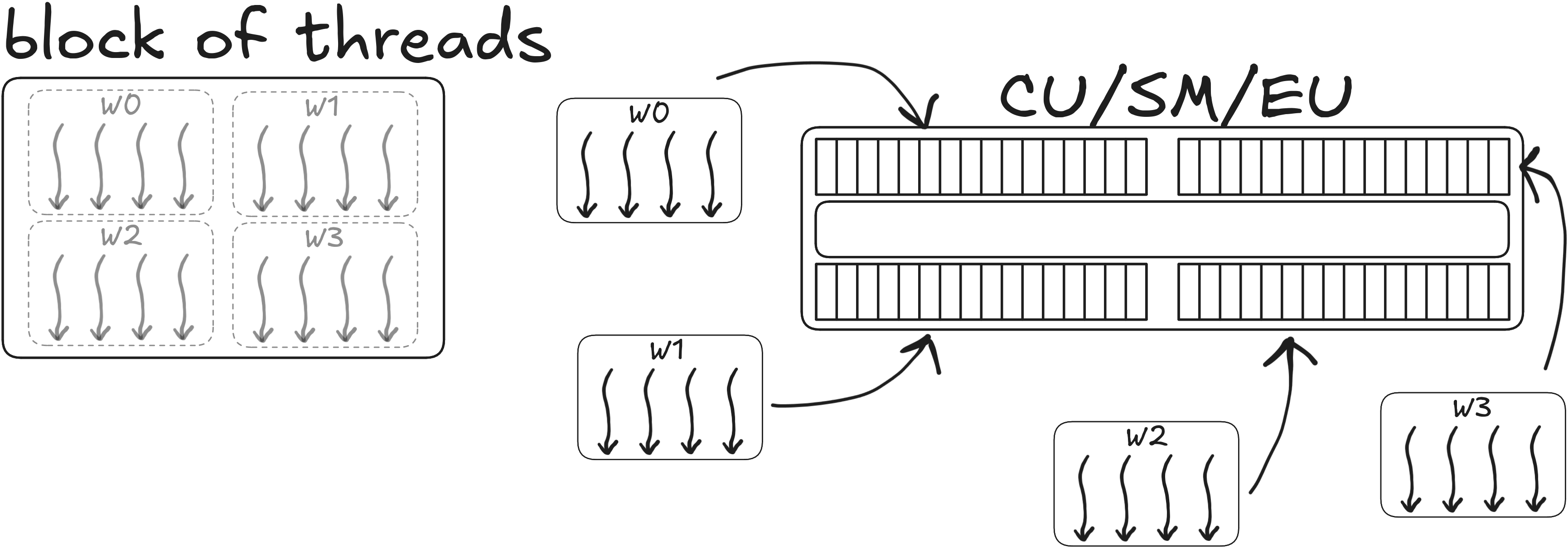
Thread - lane

Recap

  • massively parallel processor
  • own memory space –> requires data movement
  • useful when you have a lot of data
  • consists of tens or hundreds of simple processors, with multiple vector units per processor
  • 1-2 orders of magnitude more instruction per cycle compared to CPUs

Recap

  • point of view of a single thread
  • a grid of (blocks of) threads
  • grid <–> device
  • block <–> SM/CU
  • warp/wavefront <–> SMSP/SIMD
  • thread <–> lane

Questions?

Well I have couple

Assume GPU with 8 compute units, each with 4 SIMD-units of warp size 64.

  1. What is the smallest number of blocks in a grid enough to utilize all compute units?
    \((a)~ 1\quad (b)~ 32\quad (c)~ 8\)

  2. Assume there are 32 blocks. What is the minimum number of threads per block enough to utilize all of the hardware?
    \((a)~ 64\quad (b)~ 256\quad (c)~ 32\)

  3. What brand of GPU is it based on terminology?